






What's Happening?
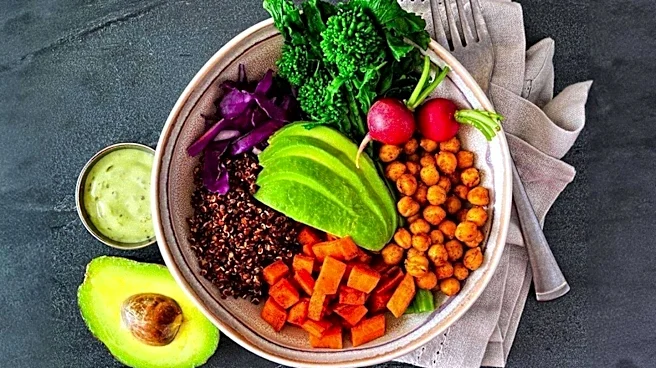
Dietitians are recommending a simple 'plate method' as the most effective dinner formula for individuals aiming for weight loss. This approach, also known as the portion plate, involves filling half of the plate with non-starchy vegetables, one-quarter
with lean or plant-based protein, and the remaining one-quarter with fiber-rich carbohydrates. Additionally, incorporating a source of healthy fat is advised to enhance satiety and nutrient absorption. Experts like Lauren Harris-Pincus, M.S., RDN, emphasize that this method allows for nutrient-rich, calorie-controlled meals without complex calculations. The strategy focuses on maximizing volume and nutrient density while managing calorie intake, promoting sustained fullness and supporting muscle mass preservation during weight loss. This method encourages diverse cooking techniques for vegetables and emphasizes whole, unprocessed foods.
Why It's Important?
This dietary recommendation is significant for public health in the U.S., where obesity rates remain a concern. By providing a straightforward and flexible framework for meal planning, the 'plate method' can empower individuals to make healthier food choices without resorting to restrictive or unsustainable diets. The emphasis on vegetables, lean proteins, and fiber-rich carbohydrates aligns with established nutritional guidelines for weight management and overall well-being. This approach can help combat common pitfalls of dieting, such as feeling deprived or overwhelmed by complex meal plans. For the food industry, this could signal a continued demand for fresh produce, lean protein sources, and whole grains, potentially influencing product development and marketing strategies towards healthier, balanced meal components. It also underscores the importance of home cooking as a tool for better portion control and ingredient management.
What's Next?
The continued promotion of the 'plate method' by dietitians and health organizations is likely to influence public perception and dietary habits. Educational campaigns and health programs may increasingly adopt and disseminate this simple visual guide for meal construction. Consumers might see more readily available resources, such as infographics and meal planning tools, that integrate this formula. Food manufacturers and meal kit services could also adapt by offering pre-portioned meals or ingredient combinations that align with the plate method's ratios. Furthermore, as awareness grows, there may be a greater demand for accessible and affordable healthy food options that facilitate adherence to these guidelines, potentially driving policy discussions around food access and nutrition education.
Beyond the Headlines
The 'plate method' transcends a mere diet plan; it represents a shift towards intuitive eating and sustainable lifestyle changes rather than temporary fixes. Its simplicity addresses the psychological burden often associated with weight loss, making healthy eating less daunting and more achievable for a broader population. This approach also subtly educates individuals on macronutrient balance and the importance of diverse food groups, fostering a deeper understanding of nutrition. Ethically, it promotes a balanced relationship with food, moving away from demonizing certain food groups and instead focusing on proportion and variety. Culturally, it could encourage a return to more mindful eating practices and home-cooked meals, potentially strengthening family meal traditions and reducing reliance on processed foods and restaurant dining.