



What's Happening?
Jamie Dimon, CEO of JPMorgan Chase, has voiced significant concerns regarding the borrowing practices fueling the current AI boom, rather than the AI bubble itself. According to Bloomberg, Dimon believes the market will continuously demand more borrowing,
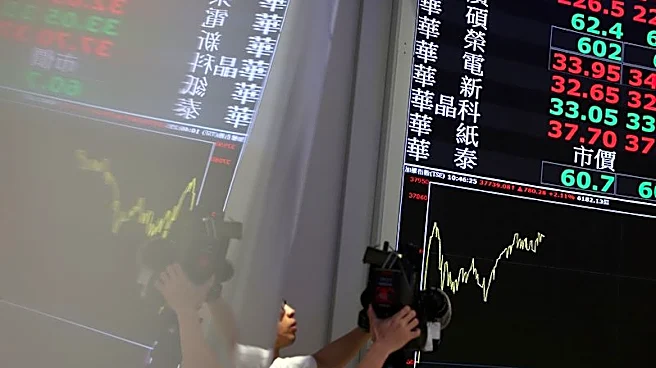
leading to a potential credit crisis. He notes that credit spreads are currently around 1.5%, a level previously observed just before the housing market burst in February 2007 and the dot-com bubble in January 2000. Companies are heavily borrowing to invest in AI, and as banks become more cautious, interest rates rise, making borrowing more expensive. This escalating cost could eventually lead to a breaking point where companies can no longer afford to borrow, triggering a credit crisis. Dimon highlighted that the Chinese and South Korean AI markets have already experienced significant downturns, with Google and Intel also facing challenges due to AI-related debt concerns.
Why It's Important?
Dimon's warning is crucial for the U.S. economy and financial markets, as a credit crisis could have far-reaching implications. The economy's reliance on credit means that a significant reduction in lending, particularly to major borrowers like AI and tech companies, could stifle growth. If AI companies struggle to borrow, it could lead to fewer jobs, reduced contracts, and a slowdown in economic expansion. The current low credit spread, while seemingly positive, mirrors conditions before past economic downturns, suggesting a potential vulnerability. A credit crisis would impact investors, businesses, and the broader public, as access to capital becomes restricted and the cost of borrowing increases. This could lead to defaults and bankruptcies, affecting various sectors beyond just technology.
What's Next?
If the credit crisis scenario unfolds as Dimon suggests, banks are likely to tighten lending standards, making it significantly harder for companies to secure loans. This pullback in lending would reduce the flow of credit into the economy, potentially leading to a decrease in overall spending and economic activity. Companies that rely on continuous borrowing for growth or even operation would face substantially higher costs or an inability to refinance existing loans. Dimon has indicated that JPMorgan is already becoming more stringent with its lending requirements. The next cracks are anticipated to appear in the data center industry. Investors will need to carefully assess their portfolios, as a market downturn could present both risks and opportunities, depending on their investment strategies.
Beyond the Headlines
The deeper implication of Dimon's concerns lies in the structural vulnerabilities of a credit-based economy, particularly when speculative investments drive borrowing. The historical parallels to the dot-com bust and the 2008 housing crisis suggest a recurring pattern where easy credit fuels bubbles, eventually leading to a painful correction. This situation raises questions about the sustainability of rapid technological advancements when financed primarily through debt. It also highlights the ethical responsibility of financial institutions to manage risk prudently and the potential for systemic risk when a single sector, like AI, becomes a dominant borrower. The shift towards higher interest rates and increased competition for capital could fundamentally alter the landscape for innovation and growth, favoring established, cash-rich entities over startups reliant on external financing.