



What's Happening?
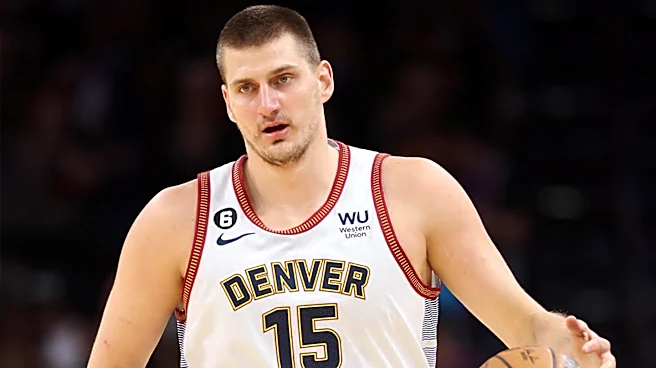
A Greek club owner has publicly claimed an attempt to acquire Nikola Jokic from the Denver Nuggets and stated an intention to try again next summer. This boast, while audacious, serves as a reminder to the Denver Nuggets organization that they must continuously
earn Nikola Jokic's commitment to the team. The statement underscores the competitive landscape for elite sports talent, where international clubs are willing to pursue high-profile players. Nikola Jokic is a pivotal player for the Nuggets, and any suggestion of his potential departure, even from an external source, brings attention to the team's long-term strategy for retaining its star athletes. The situation highlights the ongoing challenge for U.S. sports franchises to maintain their top talent amidst global interest and the need to consistently demonstrate a compelling vision for their players' careers.
Why It's Important?
This situation is important for the Denver Nuggets and the broader U.S. sports industry as it illustrates the increasing global competition for top-tier athletic talent. The public declaration by a foreign club owner, regardless of its feasibility, puts pressure on U.S. teams to not only secure long-term contracts but also to cultivate an environment that ensures player satisfaction and loyalty. For the Nuggets, retaining Nikola Jokic is crucial for their competitive standing in the NBA and their market value. A potential departure of a star player could significantly impact team performance, fan engagement, and revenue streams. This event also highlights the financial power and ambition of international sports organizations, which are increasingly looking to attract talent from established U.S. leagues. It could lead to U.S. sports leagues and teams re-evaluating their strategies for player retention, contract negotiations, and brand building to counteract such external influences. The incident serves as a reminder that the U.S. sports market is not isolated and is subject to global competitive pressures.
What's Next?
The Denver Nuggets will likely continue to focus on maintaining a strong, competitive team environment and fostering a positive relationship with Nikola Jokic. While the Greek club owner's boast is unlikely to immediately impact Jokic's current contract, it may prompt the Nuggets to reinforce their long-term commitment to him through team performance, strategic roster moves, and ongoing communication. Fans and media will likely monitor any future statements or actions from the Greek club owner, as well as any responses or reassurances from the Nuggets organization. The situation could also spark broader discussions within the NBA about player retention strategies and the influence of international teams on the league's talent pool. For Nikola Jokic, the boast may serve as a testament to his global appeal and value as a player, potentially influencing future contract negotiations or career decisions, though his current focus remains with the Denver Nuggets.
Beyond the Headlines
This incident touches upon the evolving dynamics of professional sports in a globalized world. The traditional dominance of U.S. sports leagues in attracting and retaining top talent is increasingly being challenged by the growing financial power and ambition of international clubs. This trend could lead to a more fluid movement of athletes across borders, potentially altering the competitive balance of leagues worldwide. Ethically, such public boasts, even if symbolic, raise questions about player tampering and the integrity of sports contracts, though in this case, it appears to be more of a speculative claim. Culturally, it highlights the universal appeal of basketball and the global recognition of its star players, transcending national leagues. In the long term, this could lead to increased collaboration or competition between U.S. and international sports organizations, potentially influencing player salaries, transfer fees, and the overall structure of professional sports. It also underscores the importance of a strong team culture and a compelling vision for players, beyond just financial incentives, in securing the loyalty of elite athletes.