


What's Happening?
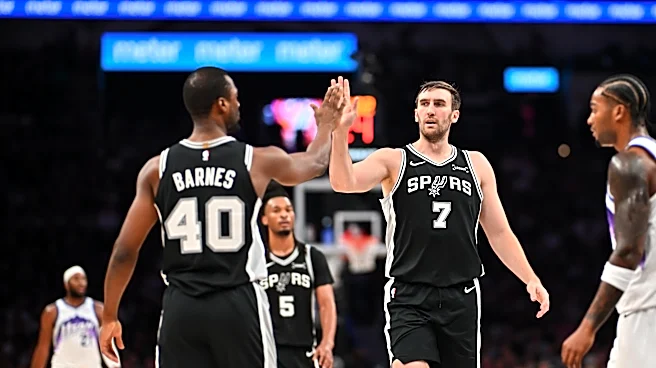
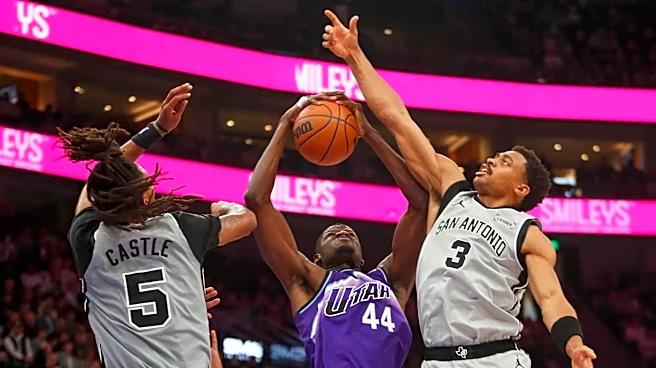
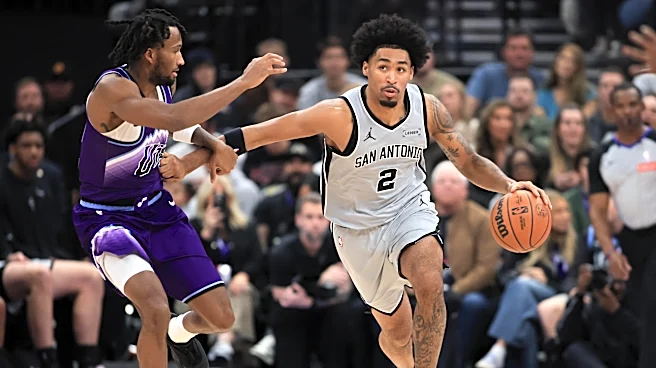
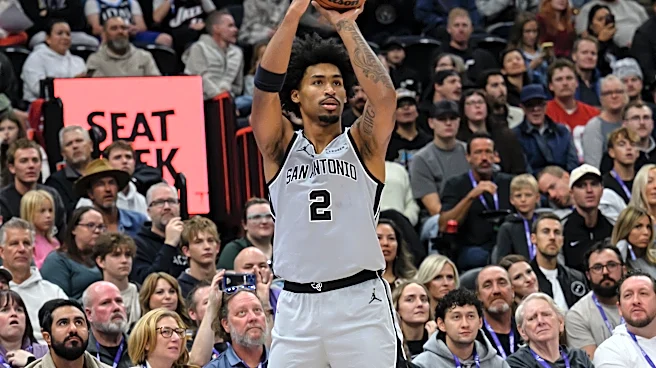
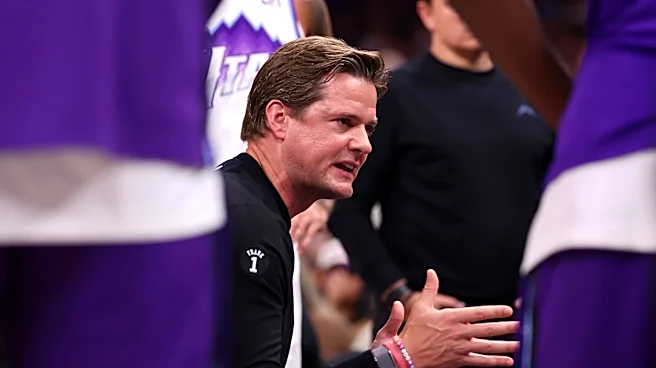
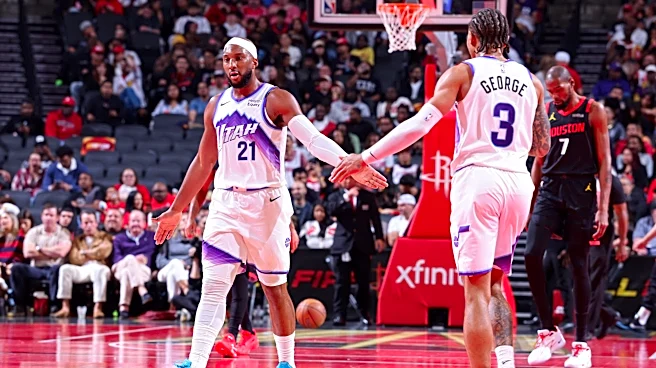
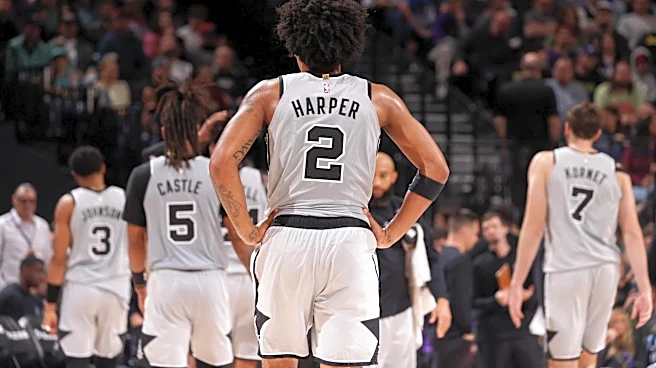
Utah Jazz head coach Will Hardy provided his assessment following the team's 110-102 loss to the San Antonio Spurs. Despite the defeat, Hardy expressed pride in the team's effort, particularly given the absence of four rotation players in the frontcourt.
He noted that costly turnovers and the inability to handle the ball effectively in late-game situations, coupled with the Spurs' physicality, contributed to the loss. Hardy highlighted the strong performance of Mo Bamba, who stepped into a starting role and scored 26 points, including 6-of-6 from beyond the arc, providing crucial floor spacing for the Jazz offense. The game saw both teams trading leads, with the Jazz relying heavily on three-point shooting, while the Spurs dominated in points in the paint and fast-break opportunities. Hardy acknowledged the team's resolve and competitive spirit, even as they face a challenging period with multiple injuries.
Why It's Important?
This event is important as it sheds light on the current state of the Utah Jazz, a U.S. professional basketball team, and the challenges they are facing early in the season. The comments from Head Coach Will Hardy underscore the impact of player injuries on team performance and strategy. For the Jazz organization, managing a depleted roster while maintaining team morale and competitive spirit is crucial for long-term development and fan engagement. The reliance on players like Mo Bamba to step up in expanded roles demonstrates the adaptability required in professional sports. For fans and stakeholders, understanding the team's struggles and the coach's perspective provides insight into the team's trajectory and potential adjustments moving forward. The emphasis on turnovers and physicality also highlights key areas for improvement that could influence future game outcomes and the team's standing in the league.
What's Next?
The Utah Jazz will need to address the issues of turnovers and late-game execution, as identified by Coach Hardy, to improve their performance in upcoming games. With several key players sidelined due to injury, the team will likely continue to rely on depth players to fill significant roles. The coaching staff will focus on developing chemistry among the available players and refining strategies to compensate for the missing talent. The team's ability to fight through fatigue, both physical and mental, will be critical as they navigate a demanding NBA schedule. Fans and analysts will be watching to see how the Jazz adapt to these challenges and whether they can translate their competitive spirit into more consistent wins as the season progresses and injured players potentially return.
Beyond the Headlines
The Jazz's current situation, marked by injuries and a tough start to the season, reflects a broader challenge faced by many professional sports teams: balancing immediate competitive goals with long-term player development and health. The emotional toll of a losing streak on young players, as hinted at by the team's struggles, can significantly impact their confidence and growth. Coach Hardy's optimistic public stance, despite the team's difficulties, highlights the psychological aspect of coaching and leadership in professional sports. This scenario also brings into focus the strategic decisions made by front offices regarding roster construction and injury management, which can have lasting implications for a franchise's success and its relationship with its fan base. The resilience shown by players stepping into larger roles, like Mo Bamba, can also be a testament to the depth and potential within a team, even during challenging times.