





What's Happening?
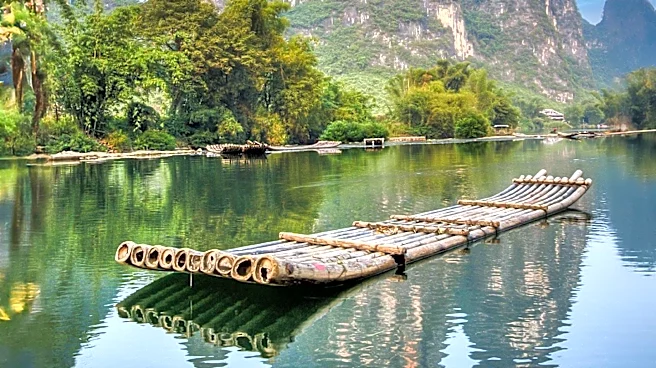
Yinshan Mountain, located in the Changning area of the Hunan region, is being highlighted as a hidden gem offering an undiscovered and slow-paced lifestyle. This area is part of the China Yinshan Cultural Tourism Area, which is recognized for its unique
cultural resources and mountain scenery. The region is themed around Yinshan cultural experiences, geological sightseeing, and rural leisure, encompassing Yinshan, Zhongtian Ancient Residence, God of Wealth Cave, Haiyi Bay, and Shima Attraction. Yinshan itself includes 'one peak and three cities'—China Celebrity Seals City, China Calligraphy City, and China Commemorative Seals City—featuring over 4,800 seal patterns from various dynasties carved into rocks, integrating cultural and natural landscapes. The God of Wealth Cave, known as an 'underground art treasure house,' is a karst landform with numerous scenic spots, while Zhongtian Ancient House is a well-preserved Ming and Qing Dynasties building complex.
Why It's Important?
The emergence of destinations like Yinshan Mountain as 'hidden gems' reflects a growing trend in tourism towards seeking authentic, less crowded, and culturally immersive experiences. For the U.S. tourism market, this could influence travel preferences, with a potential shift from mainstream destinations to more niche, culturally rich locations. This trend could also impact the global tourism industry by diversifying popular travel routes and encouraging the development of sustainable tourism in previously overlooked regions. The emphasis on a 'slow-paced lifestyle' aligns with a broader desire for wellness and escape from the fast-paced modern world, potentially attracting travelers looking for relaxation and cultural enrichment rather than typical tourist attractions. The preservation of ancient cultural sites like Zhongtian Ancient House also contributes to global cultural heritage, offering unique educational opportunities for visitors.
What's Next?
As awareness of places like Yinshan Mountain grows, there may be increased efforts to develop infrastructure and tourism services in the Changning region, while striving to maintain its 'undiscovered' charm. Local authorities and tourism operators will likely focus on balancing accessibility with preservation to prevent over-tourism and maintain the authentic experience. Marketing efforts might target specific demographics, such as cultural tourists, eco-tourists, and those seeking tranquil retreats. The success of such initiatives could serve as a model for other regions looking to promote their unique cultural and natural assets. Future developments could include enhanced guided tours, cultural workshops, and improved accommodation options, all designed to cater to a discerning international audience while respecting local traditions and the environment.
Beyond the Headlines
The concept of 'hidden gems' like Yinshan Mountain highlights a deeper societal yearning for authenticity and a connection to history and nature in an increasingly globalized world. This trend challenges the conventional tourism model, which often prioritizes commercialization over cultural preservation. The integration of cultural landscapes with natural beauty, as seen in Yinshan's carved seal patterns, underscores the profound relationship between human civilization and the environment. Ethically, the development of such sites requires careful consideration to ensure that local communities benefit sustainably and that the cultural integrity of the area is maintained. This shift in travel preferences could also lead to a re-evaluation of what constitutes 'value' in tourism, moving beyond mere sightseeing to more meaningful and transformative experiences.