







What's Happening?
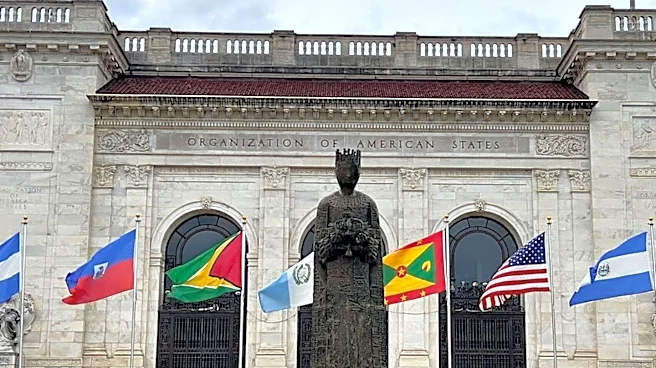
The Organization of American States (OAS) has initiated a new hemispheric private-sector program called 'Private Sector of the Americas.' This initiative aims to enhance trade, investment, and business collaboration throughout North, Central, and South
America, as well as the Caribbean. It brings together prominent chambers of commerce and business organizations to pinpoint shared priorities, address obstacles to investment, and expand cross-border commercial opportunities. The OAS formally introduced the initiative's inaugural Board of Directors at an event attended by over 250 business leaders, government officials, and diplomatic community members. OAS Secretary General Albert R. Ramdin stated that this platform would enable governments and private-sector entities to establish common priorities and develop a regional agenda. The initiative will concentrate on key sectors including energy and natural resources, digital transformation, infrastructure and logistics, biodiversity, tourism, and food production. Founding partner organizations include the US Chamber of Commerce and the Americas Society/Council of the Americas.
Why It's Important?
This initiative is significant because it seeks to create a unified approach to economic development across the Americas, fostering greater stability and growth. By bringing together diverse private sector entities and governments, it aims to streamline efforts to overcome investment barriers and unlock new commercial avenues. For U.S. businesses, this could translate into expanded market access and new partnership opportunities within the hemisphere, particularly in the identified focus areas like digital transformation and infrastructure. The emphasis on a common agenda could lead to more predictable regulatory environments and reduced trade friction, benefiting companies engaged in cross-border commerce. The involvement of organizations like the US Chamber of Commerce underscores the potential for increased U.S. influence and participation in regional economic strategies, potentially leading to job creation and economic benefits within the United States through enhanced trade and investment flows.
What's Next?
The 'Private Sector of the Americas' initiative is set to develop a roadmap for regional economic cooperation, with its inaugural Board of Directors, chaired by Bettina Bulgheroni, leading the strategic direction. The initiative will continue to be open to additional organizations and partners across the hemisphere, inviting them to contribute proposals, expertise, and resources. This suggests an ongoing expansion of its network and influence. Future steps will likely involve working groups focused on the identified priority sectors: energy and natural resources, digital transformation, infrastructure and logistics, biodiversity, tourism, and food production. These groups will aim to translate the initiative's broad goals into concrete projects and policy recommendations. The OAS will serve as a central forum for dialogue, facilitating continuous engagement between the private sector and member states to ensure proposals are followed up and implemented, with the ultimate goal of promoting investment, creating jobs, and expanding economic opportunities.
Beyond the Headlines
Beyond its immediate economic objectives, this OAS initiative carries broader implications for regional integration and governance. By establishing a permanent channel for dialogue between the private sector and governments, it could foster a more collaborative model of development, where economic policies are more closely aligned with business needs and market realities. This could lead to greater resilience in the face of economic shocks and a more harmonized approach to regional challenges. Ethically, the initiative's focus on sustainable sectors like biodiversity and food production suggests a commitment to responsible economic growth, potentially influencing corporate social responsibility standards across the hemisphere. Legally, the push to address investment barriers could lead to calls for greater regulatory convergence and transparency, creating a more predictable legal framework for international business. Culturally, increased economic integration could foster greater understanding and cooperation among diverse nations in the Americas, strengthening regional identity and collective problem-solving capabilities.