

What's Happening?
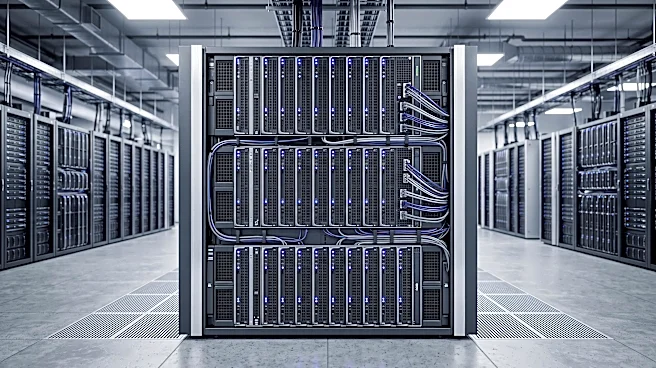
Gartner's latest forecast indicates a substantial increase in IT spending for 2026 and 2027, largely propelled by massive investments in Generative AI (GenAI) infrastructure and rising hardware costs. According to Gartner, datacenter systems revenues
are projected to surge by 73.8% to $879 billion in 2026, followed by a 55.5% increase to $1.37 trillion in 2027. When including Infrastructure as a Service (IaaS) rentals, total spending on datacenter systems and IaaS is expected to reach $1.17 trillion in 2026, a 60.8% growth, and further increase by 48% to $1.73 trillion in 2027. This marks a significant shift where hardware spending, in aggregate, is anticipated to surpass spending on enterprise software and IT services for the first time since the early days of mainframe computing. The growth is attributed to both the increasing costs of components like GPUs, CPUs, DRAM, flash, and networking, and the rising shipments of GenAI systems alongside traditional infrastructure upgrades.
Why It's Important?
This projected surge in IT spending, particularly in hardware and GenAI infrastructure, signifies a major reorientation of corporate technology budgets. For U.S. businesses, this means a substantial allocation of resources towards advanced computing capabilities, potentially accelerating digital transformation and AI adoption across various sectors. Companies that provide hardware, cloud services, and AI development tools stand to gain significantly from this trend. The shift of hardware spending surpassing software and IT services spending indicates a foundational investment in the physical infrastructure required to support the burgeoning AI landscape. This could lead to increased demand for skilled IT professionals specializing in AI and datacenter management, impacting the U.S. job market. Furthermore, the emphasis on GenAI suggests that businesses are moving beyond experimental phases and are integrating AI into core operations, which could drive innovation and efficiency but also necessitate careful strategic planning for long-term inference platforms.
What's Next?
The immediate future will likely see continued high demand for AI-optimized hardware and cloud infrastructure. Companies, especially small and medium businesses and large enterprises, will need to carefully evaluate their AI inference platform strategies, as not all will require training their own AI models. The focus will shift towards scaling AI inference systems in terms of capacity and reducing the cost per token processed. This will drive innovation in specialized parallel processors and disaggregated inference platforms. Hardware manufacturers and cloud providers are expected to continue seeing robust order books, with Nvidia's GPU orders already filled for 2027 and filling for 2028. Businesses will also need to balance investments in new GenAI systems with necessary upgrades to existing business systems to ensure sufficient capacity and data feeding into AI applications.
Beyond the Headlines
The unprecedented growth in hardware spending relative to software and services could signal a fundamental change in the IT industry's economic structure. This shift harks back to an era where hardware was the primary cost driver, potentially leading to new business models for hardware manufacturers and a re-evaluation of the value proposition of integrated hardware-software solutions. The ethical and societal implications of widespread GenAI adoption, while not directly addressed in spending forecasts, will become increasingly prominent as these technologies become more embedded in daily operations. The need for careful selection of long-term inference platforms also highlights the growing complexity and strategic importance of IT decisions, moving beyond simple cost-benefit analyses to encompass future scalability, performance, and vendor lock-in considerations.