





What's Happening?
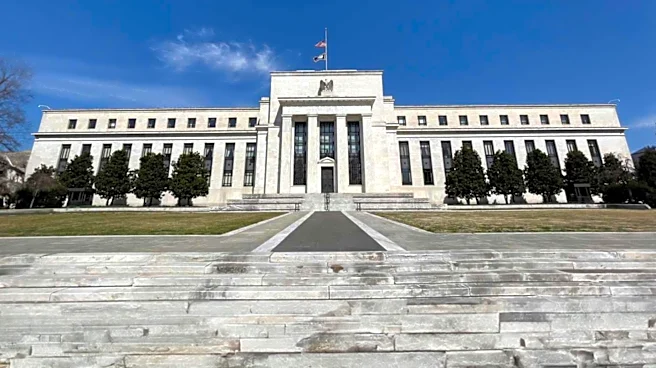
U.S. Federal Reserve Governor Christopher Waller has identified high inflation as the primary risk facing the Federal Reserve, given the current stability in the labor market. Speaking at an economics conference in Rome, Waller noted that the labor market has stabilized,
shifting the focus to rising inflation. The Federal Reserve, under new Chairman Kevin Warsh, held interest rates steady in June, but with inflation above the target, there is a growing consensus among Fed officials for tighter monetary policy. Nine Fed officials have projected the need for a rate hike this year, with a potential increase on the table for the upcoming July meeting. Investors are anticipating a rate rise by September, with a 25% chance of a hike in July.
Why It's Important?
The emphasis on inflation by the Federal Reserve highlights the ongoing challenge of balancing economic growth with price stability. High inflation can erode purchasing power and savings, impacting consumers and businesses alike. The potential for a rate hike indicates a shift towards more restrictive monetary policy, which could affect borrowing costs for individuals and companies. This move is significant for financial markets, as it signals the Fed's commitment to controlling inflation, even at the risk of slowing economic growth. Stakeholders, including investors and policymakers, are closely monitoring these developments, as they could influence economic strategies and financial planning.
What's Next?
The Federal Reserve's upcoming meeting in late July will be crucial in determining the next steps in monetary policy. The release of consumer price data on July 14 will provide key insights into inflation trends, influencing the Fed's decision-making process. If inflation remains high, the likelihood of a rate hike increases, which could lead to adjustments in financial markets and economic forecasts. Policymakers and economists will be assessing the impact of potential rate changes on economic growth and employment, as well as the broader implications for fiscal policy and international trade.