





What's Happening?
Lam Research, a leading provider of semiconductor fabrication equipment, has inaugurated its largest U.S. warehouse in Livermore, California. This approximately 470,000-square-foot logistics facility will serve as the central hub for inventory storage,
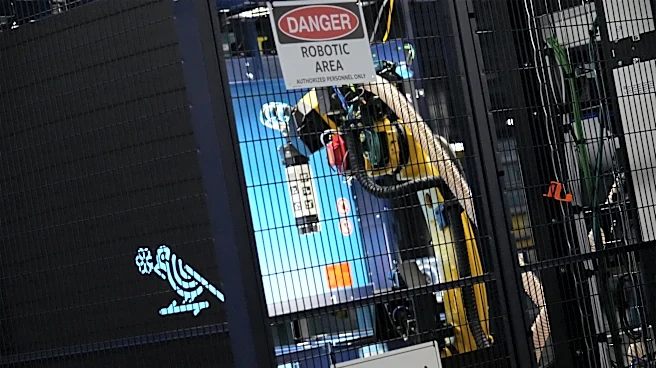
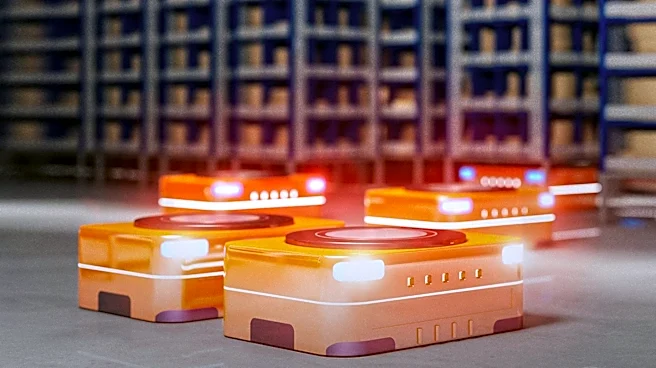
retrieval, and distribution for all of Lam's California operations, including its manufacturing sites in Livermore and research and development headquarters in Fremont. The new facility, located in the Oaks Business Park, aims to enhance operational efficiency and meet the escalating demand for semiconductors, particularly those driven by advancements in artificial intelligence. The warehouse is equipped with a 40,000-square-foot automated storage and retrieval system and over a dozen robots, enabling the location and retrieval of up to 500,000 unique parts in under 30 seconds—a 12-fold increase in speed compared to previous systems. Company officials, including Senior Vice President Karthik Rammohan, Livermore Mayor John Marchand, and State Senator Jerry McNerney, attended a ribbon-cutting ceremony on September 28. Initial operations at the hub have commenced, and the facility is projected to create over 240 jobs by 2027.
Why It's Important?
This new logistics hub is crucial for Lam Research and the broader U.S. semiconductor industry. By centralizing its supply chain operations, Lam Research can achieve greater agility and efficiency, reducing costs associated with moving materials and personnel between multiple facilities. This move directly addresses the growing global demand for advanced chips, which is being fueled by the rapid expansion of artificial intelligence requiring increased computing power, memory capacity, and energy efficiency. The enhanced operational capabilities will allow Lam Research to better support its customers and manufacturing processes, ensuring a more robust and responsive supply of critical semiconductor equipment. The creation of over 240 jobs in Livermore also signifies a positive economic impact for the region, contributing to local employment and reinforcing California's role as a hub for technological innovation and manufacturing. Furthermore, as Lam Research's equipment is integral to the production of nearly all advanced chips worldwide, this investment strengthens the foundational infrastructure for semiconductor manufacturing, which is vital for national technological competitiveness and economic security.
What's Next?
Following the commencement of initial operations, Lam Research will focus on fully integrating the new logistics facility into its statewide operations, optimizing the automated systems and robotic processes to maximize efficiency. The company will also work towards achieving its goal of creating over 240 new jobs by 2027, which will involve recruitment and training initiatives for the specialized roles required to manage the advanced warehouse systems. The increased efficiency and capacity provided by this hub are expected to enable Lam Research to better respond to market fluctuations and surges in demand for semiconductor manufacturing equipment, particularly as AI technologies continue to evolve. Industry analysts, such as Morgan Stanley, anticipate strong financial performance from Lam Research, with revenue potentially reaching $9 billion for the quarter ending in December, partly due to improved operational capabilities and continued market share gains in advanced logic processes. The company's ability to meet these heightened expectations will be closely watched by investors and the semiconductor industry.
Beyond the Headlines
The opening of Lam Research's advanced logistics facility underscores a broader trend in the semiconductor industry: the strategic importance of supply chain resilience and efficiency in an era of rapid technological advancement and geopolitical complexities. The investment in automation and robotics within the warehouse highlights a commitment to leveraging cutting-edge technology not just in product manufacturing but also in operational logistics, setting a new standard for the industry. This move also reflects a strategic effort to consolidate and optimize domestic operations, potentially reducing reliance on more dispersed global supply chains, which have proven vulnerable to disruptions in recent years. The focus on AI-driven demand for semiconductors suggests a long-term vision where the foundational infrastructure for chip production must be highly adaptable and scalable. This facility is not merely a warehouse; it represents a critical component in the intricate ecosystem that supports the development and deployment of next-generation technologies, influencing everything from consumer electronics to national defense capabilities.