






What's Happening?
Indiana Governor Mike Braun has announced that RayzeBio, Inc., a Bristol Myers Squibb Company, plans to significantly expand its life sciences operations in Indiana. This expansion involves an investment of over $173 million to establish an approximately
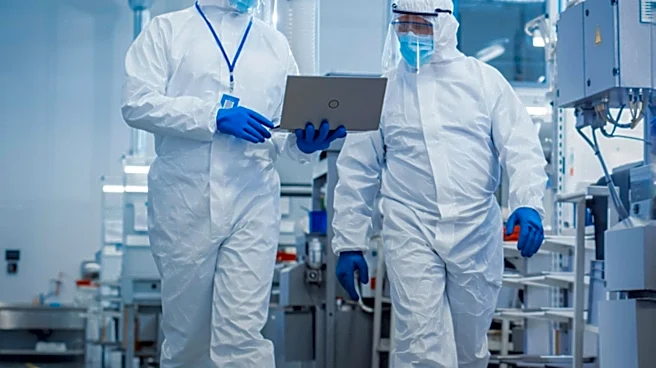
450,000-square-foot, state-of-the-art facility at the Anson Industrial Park in Boone County. The project is expected to create up to 100 new, high-wage jobs at its Indianapolis and planned Whitestown locations by the end of 2029, with average annual wages projected to exceed $130,000. This new facility will enhance RayzeBio's capacity to produce next-generation radiopharmaceutical therapies (RPTs), which utilize radioisotopes to target and deliver internal radiation to cancer cells, aiming to reduce risk to surrounding healthy tissues. The expansion complements RayzeBio's existing 77,000-square-foot RPT supply and manufacturing operation in Indianapolis, which supports clinical and commercial supply globally. RayzeBio, established in 2020 and acquired by Bristol Myers Squibb in 2024, focuses on advancing actinium-based RPTs and developing investigational drug programs for various solid tumors, including gastroenteropancreatic neuroendocrine tumors, liver, and prostate cancers.
Why It's Important?
This significant investment by RayzeBio and Bristol Myers Squibb is a major boost to Indiana's life sciences sector, reinforcing the state's ambition to be recognized as the 'Radiopharmaceutical Capital of the World.' The creation of 100 high-wage jobs, with average annual salaries exceeding $130,000, will contribute to economic growth and provide advanced career opportunities for Hoosiers. This aligns with Governor Braun's broader life sciences initiative, which aims to invest $1 billion over 10 years and create 100,000 new jobs in agricultural and life sciences, positioning Indiana as a premier destination for human, animal, and plant health. The expansion of radiopharmaceutical therapy production is critical for advancing cancer treatment, offering innovative solutions that target cancer cells more precisely while minimizing harm to healthy tissues. This development could lead to improved patient outcomes and solidify Indiana's role in global medical innovation. Furthermore, attracting and retaining such high-tech manufacturing operations fosters a robust ecosystem for research and development, potentially drawing further investment and talent to the state.
What's Next?
Construction of the new RayzeBio facility in Boone County is expected to commence this year. The company will begin hiring for advanced manufacturing roles at both its new Whitestown location and its existing Indianapolis facility, with the goal of filling up to 100 new positions by the end of 2029. This expansion is a key component of Indiana's broader strategy to invest in its life sciences sector, with ongoing efforts to position the 'BioHeartland' for future growth and investment. The state will likely continue to offer incentives and support to attract other life sciences companies, aiming to achieve its goal of creating 100,000 new jobs in the sector over the next decade. The success of RayzeBio's expansion could serve as a model for other companies considering investment in Indiana, further solidifying the state's reputation as a hub for medical innovation and advanced manufacturing. The development of new radiopharmaceutical therapies will also continue, with the potential for new treatments for various cancers to emerge from these expanded operations.
Beyond the Headlines
The expansion of RayzeBio in Indiana signifies a deeper trend in the pharmaceutical industry towards highly specialized and targeted therapies, particularly in oncology. Radiopharmaceutical therapies represent a cutting-edge approach to cancer treatment, moving beyond traditional chemotherapy and radiation to more precise, molecular-level interventions. This shift has profound implications for patient care, potentially offering more effective treatments with fewer side effects. For Indiana, becoming a global leader in this niche but rapidly growing field could establish a unique economic identity, attracting specialized talent and fostering a culture of innovation. However, it also presents challenges, such as the need for a highly skilled workforce, specialized infrastructure, and robust regulatory frameworks to ensure the safe production and handling of radioactive materials. The state's commitment to investing heavily in life sciences reflects a strategic understanding of future healthcare needs and the economic opportunities they present, positioning Indiana at the forefront of medical advancements and high-tech manufacturing.