



What's Happening?
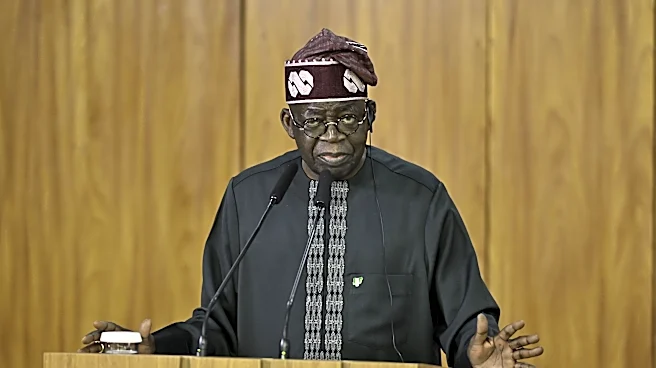
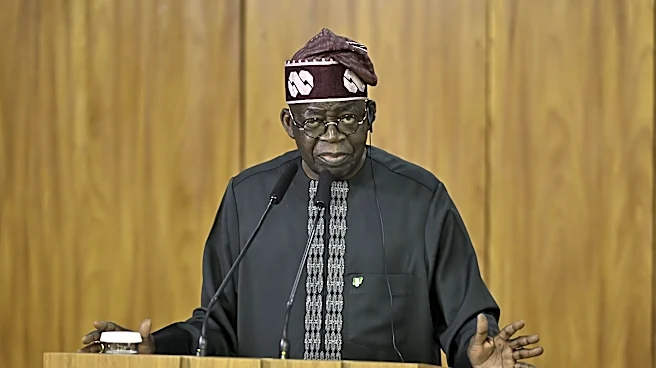
Nigerian President Bola Tinubu has announced that the non-oil sector now constitutes approximately 96% of Nigeria's Gross Domestic Product (GDP), with non-oil exports reaching a historic high of over $6 billion. This announcement was made during the public
presentation of a book titled 'Economic Diversification and Structural Transformation in Nigeria: Past, Present and Future.' President Tinubu, represented by Speaker of the House of Representatives Tajudeen Abbas, highlighted that Nigeria's external reserves have increased to about $55 billion, providing more than 14 months of import cover. He noted that these figures demonstrate significant progress in the government's efforts to reduce the nation's historical reliance on crude oil revenues, which have traditionally made the budget, currency, and livelihoods vulnerable to international oil market fluctuations. The administration inherited a challenging economic landscape characterized by a weakening naira, high debt-service obligations, depleted foreign reserves, fuel subsidy costs, and declining industrial activities. In response, President Tinubu's administration implemented difficult but necessary reforms, including the removal of fuel subsidies and the unification of the foreign exchange market, asserting that these measures were crucial for economic recovery and growth.
Why It's Important?
The shift in Nigeria's economic landscape, with the non-oil sector dominating GDP, signifies a crucial step towards economic diversification and resilience. For decades, Nigeria's economy has been heavily dependent on oil, making it susceptible to global oil price volatility. This new development indicates a potential for greater stability and sustainable growth, reducing the country's vulnerability to external shocks. The target of a $1 trillion economy by 2030, under the Medium-Term National Development Plan 2026–2030, underscores an ambitious vision for national prosperity. The emphasis on private sector involvement, expected to provide 86% of the necessary investment, highlights a strategic move towards market-driven growth and reduced government burden. This approach could attract significant foreign and domestic investment, fostering innovation, manufacturing, and exports. Furthermore, the government's focus on infrastructure development in power, roads, and railways aims to support industrialization and agricultural production, which are vital for job creation and poverty reduction. The successful arbitration win of $3.38 billion for the Mambilla hydropower project also signals a commitment to unlocking stalled critical infrastructure projects, which can significantly boost economic activity and energy supply.
What's Next?
Looking ahead, President Tinubu's administration plans to continue implementing economic reforms and infrastructure projects to achieve its $1 trillion economy target by 2030. The government will focus on attracting private capital through initiatives like the 2025 budget's De-risking Framework and ongoing tax reforms designed to harmonize the tax system and eliminate multiple taxation. Investments in critical infrastructure, including power, roads, and railways, are expected to continue, with projects like the Kano-Katsina-Maradi railway and the Lagos-Calabar Coastal Highway aimed at improving trade and economic activities. The administration also plans to strengthen the agricultural sector through irrigation, mechanization, and livestock reforms, while supporting local manufacturers with single-digit interest loans. Efforts will also be directed towards local processing of solid minerals to add value rather than exporting raw materials. Additionally, significant investments in digital infrastructure, including laying 90,000 kilometers of fiber-optic cables and the 3 Million Technical Talent (3MTT) program, are underway to equip young Nigerians with digital skills. The government also intends to establish a regulatory authority for the housing and real estate sector to enhance transparency and consumer protection.
Beyond the Headlines
The pronounced shift towards a non-oil-dependent economy in Nigeria carries profound long-term implications beyond immediate economic indicators. This diversification could fundamentally alter Nigeria's geopolitical standing, reducing its susceptibility to global energy politics and allowing it to exert influence through a more diversified economic base. Ethically, this move could lead to a more equitable distribution of wealth, as the benefits of a broader economic base are less concentrated than those from a single commodity. Socially, it could foster a more robust middle class, driven by growth in manufacturing, technology, and agriculture, thereby reducing social inequalities and potential unrest. Environmentally, a reduced reliance on oil could pave the way for greater investment in renewable energy and sustainable practices, aligning Nigeria with global climate goals. Legally, the ongoing tax reforms and efforts to attract private investment will necessitate a stable and predictable legal framework, enhancing investor confidence and potentially leading to stronger rule of law. This economic transformation could also inspire other resource-dependent African nations to pursue similar diversification strategies, fostering regional economic stability and growth.