





What's Happening?
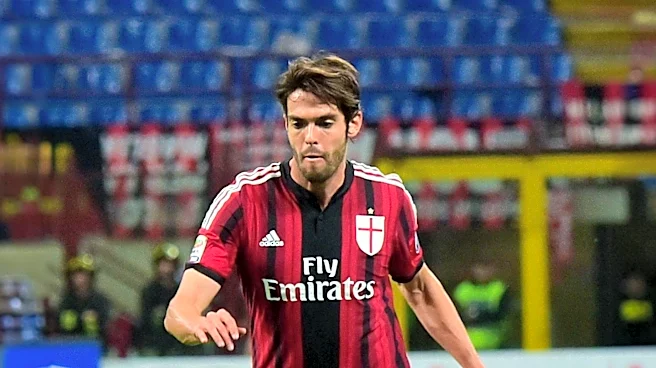
In 2009, Brazilian footballer Kaka, who won the Ballon d'Or in 2007, was presented with a lucrative offer from Manchester City. The club, newly enriched, proposed a staggering £108 million transfer fee, which would have set a new world record. Despite
the financial allure, Kaka opted against the move, citing the timing as inappropriate. Instead, he joined Real Madrid later that year for £56 million. During his tenure at Real Madrid, Kaka won the Spanish Cup in 2011 and La Liga in 2012. He later returned to AC Milan for a season before moving to Major League Soccer's Orlando City, eventually concluding his career at Sao Paulo in Brazil.
Why It's Important?
Kaka's decision to reject Manchester City's offer highlights the complex considerations athletes face beyond financial incentives. His choice underscores the importance of timing and personal career goals in professional sports. For Manchester City, missing out on Kaka was a significant moment in their early attempts to establish themselves as a powerhouse in European football. Kaka's subsequent success at Real Madrid and his influence in MLS with Orlando City demonstrate the potential impact of strategic career moves. This decision also reflects on the broader dynamics of football transfers, where player preferences and career aspirations can outweigh financial offers.
What's Next?
While Kaka's career has since concluded, the implications of his decision continue to resonate in the football world. Manchester City has since established itself as a dominant force in English and European football, often securing top talent. Kaka's career trajectory serves as a case study for current and future players weighing similar decisions. The ongoing evolution of football transfers, with increasing financial stakes, will likely see more players facing similar crossroads, balancing financial offers with personal and professional aspirations.