






What's Happening?
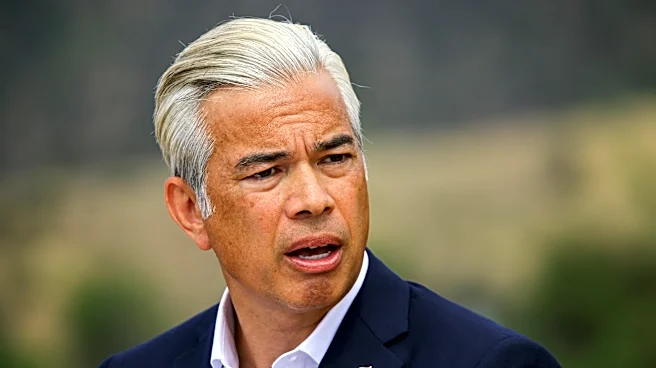
California Attorney General Rob Bonta has canceled a scheduled meeting with Paramount regarding a potential settlement for the state's antitrust lawsuit against Paramount's proposed $110 billion acquisition of Warner Bros. Discovery. Bonta accused Paramount of leaking
and misrepresenting details of prior confidential settlement discussions, stating that the company was 'playing games' and demonstrating a 'lack of good faith.' Paramount, in response, denied being the source of the leaks and expressed a desire to continue good-faith discussions. This development is the latest in a corporate saga that has seen 12 state attorneys general, including California, and the Writers Guild of America file a lawsuit challenging the merger. They argue the deal violates federal antitrust law and threatens competition in wide-release theatrical films, top-grossing movies, and basic cable television distribution. Paramount maintains the merger will increase economic competition and production output. The company has agreed to freeze the merger until June 1, 2027, or until the antitrust challenge is resolved, with a trial scheduled for early March.
Why It's Important?
This cancellation of settlement talks signifies a deepening of the legal battle surrounding the Paramount-Warner Bros. Discovery merger, with significant implications for the U.S. entertainment industry and antitrust enforcement. The lawsuit, brought by a coalition of states, highlights concerns about market concentration and potential harm to competition, which could lead to higher prices, lower content quality, and fewer creative opportunities for workers. The outcome of this case could set a precedent for future media mergers, influencing how antitrust laws are applied to large-scale consolidations in the entertainment sector. Paramount's threat to relocate its headquarters out of California if the antitrust battle continues also underscores the economic stakes for the state, potentially impacting jobs and tax revenue. The ongoing uncertainty is detrimental to workers and productions, as noted by Los Angeles Mayor Karen Bass, and could lead to significant financial penalties for Paramount if the deal is not closed by October 1, incurring a $7 million-a-day 'ticking fee' to Warner Bros. shareholders.
What's Next?
With settlement talks halted, the antitrust lawsuit against the Paramount-Warner Bros. Discovery merger is likely to proceed towards a trial scheduled for early March. Paramount will continue to face pressure from the coalition of state attorneys general, who are seeking 'robust structural remedies' such as divestitures of cable channels or commitments to keep the movie studio separate from Warner Bros. Discovery. The company's agreement to freeze the merger until June 1, 2027, provides a timeline for resolution, but the looming 'ticking fee' of $7 million per day after October 1 adds significant financial urgency for Paramount. Political leaders in California, including Governor Gavin Newsom and Los Angeles Mayor Karen Bass, have urged both sides to find a resolution, indicating a desire to mitigate potential negative impacts on the state's economy and entertainment industry. Paramount has secured regulatory approvals from over 60 territories worldwide, but the U.S. state-level challenges remain a critical hurdle.
Beyond the Headlines
The dispute over the Paramount-Warner Bros. Discovery merger extends beyond typical antitrust concerns, touching upon the broader landscape of media consolidation and its impact on creative industries. The accusation of leaks and misrepresentation during settlement talks introduces an element of distrust, potentially complicating future negotiations and highlighting the high-stakes nature of such corporate battles. The potential relocation of Paramount's headquarters from California, a hub of the entertainment industry, underscores the leverage corporations can exert in regulatory disputes and raises questions about the balance between corporate interests and state regulatory oversight. This case also reflects a growing scrutiny of large media mergers by state attorneys general, even after federal agencies like the Department of Justice have given clearance, suggesting a more fragmented and potentially more challenging regulatory environment for major corporate transactions in the U.S. The outcome could influence the future structure of Hollywood and the broader media ecosystem.