
What's Happening?
Saudi Arabia's Public Investment Fund (PIF), a $1 trillion sovereign wealth fund, is experiencing increased funding pressure due to ongoing regional conflict and an anticipated economic contraction. The
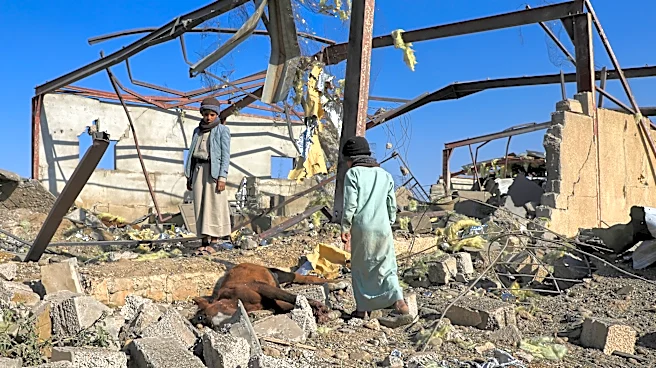
PIF's headquarters were recently struck by Iran-backed Houthis, resulting in 11 injuries. This incident coincided with Riyadh announcing an estimated budget deficit of SAR190 billion ($50.64 billion) for 2027. The kingdom is bracing for its first economic contraction in several years, with foreign direct investment (FDI) declining by 18% in the second quarter. The PIF is exploring new fundraising strategies, including selling stakes in portfolio companies and increasing borrowing. Recently, it sold a 49% stake in Saudi AI firm Humain to Aramco and secured a €2.8 billion ($3 billion) loan from a consortium of 25 banks. Despite these challenges, S&P Global Ratings assigned PIF an inaugural A+ long-term credit rating with a stable outlook, reflecting confidence in its long-term strategy and financial position.
Why It's Important?
The financial strain on Saudi Arabia's PIF has significant implications for the kingdom's ambitious Vision 2030 economic diversification plan. The PIF is a key driver of this plan, investing in mega-projects like Neom and various other sectors to reduce reliance on oil. Declining FDI and mounting losses, calculated at nearly $30 billion in cumulative impairments during 2024 and 2025, could hinder the progress of these transformative projects. The need for increased borrowing, coupled with rising financing costs due to the riyal's peg to the U.S. dollar, could force PIF to prioritize higher-return projects. This situation could lead to further write-downs on existing large-scale developments, impacting contractors and the overall pace of economic transformation. The confidence shown by S&P's A+ rating, however, suggests that international financial markets still view PIF's long-term strategy as viable, potentially easing future borrowing efforts.
What's Next?
The PIF plans to return to the global debt market early next year to secure additional funding. This move will be crucial for sustaining its investment pipeline, especially as it faces higher borrowing costs. The fund is also expected to continue exploring the sale of stakes in its portfolio companies to generate capital. Analysts anticipate further write-downs on major projects like Neom, which could lead to adjustments in project scope or timelines. The kingdom's ability to attract foreign investors will largely depend on the trajectory of the regional conflict, as many are currently adopting a wait-and-see approach. The PIF's focus may shift towards projects with quicker and higher returns to navigate the current financial environment, potentially impacting the broader scope of Vision 2030 initiatives.
Beyond the Headlines
The challenges faced by the PIF highlight the complex interplay between geopolitical stability, economic ambition, and financial sustainability. The ongoing regional conflict not only directly impacts the PIF's operations through attacks but also indirectly by deterring foreign investment and increasing defense expenditures, which strain the national budget. The PIF's strategy of diversifying funding sources, including public-to-public transactions and increased borrowing, reflects a pragmatic adaptation to these pressures. However, the long-term success of Vision 2030 will increasingly depend on the effective utilization of human capital and productivity, as emphasized by experts. Transforming investments in education and skills into productive economic output will be critical for Saudi Arabia to realize its demographic dividend and achieve sustained economic competitiveness beyond financial capital.