







What's Happening?
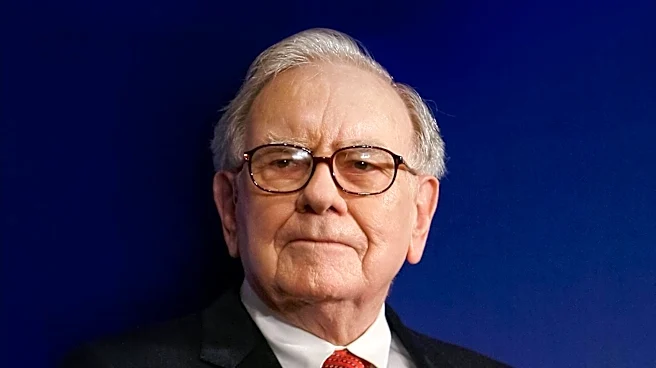
Billionaire investor Warren Buffett attributes much of his success to spending significant time alone, reading and thinking without interruption. This practice, which he considers a rule rather than a luxury, is uncommon in American business. Individuals
who enjoy solitude often share five key personality traits with Buffett: independent thinking, extreme focus and patience, a low need for social validation, disciplined emotional control, and selective relationships. Buffett's approach involves drawing his own conclusions from original company filings and shareholder letters, rather than relying on popular opinion. He famously advises being 'fearful when others are greedy and greedy when others are fearful,' a strategy that requires standing apart from the crowd. His ability to remain calm during market panics stems from this disciplined emotional control, developed through quiet moments of introspection. He also maintains a small, trusted circle of relationships, exemplified by his long-standing partnership with Charlie Munger, rather than a wide network of acquaintances.
Why It's Important?
Buffett's emphasis on solitude and independent thought challenges conventional business wisdom that often prioritizes constant collaboration and social engagement. His career demonstrates that deep, uninterrupted thinking can lead to superior judgment and strategic decision-making, offering a counter-narrative to the fast-paced, highly connected modern corporate environment. This perspective suggests that fostering environments for quiet contemplation, such as 'quiet rooms,' could be crucial for innovation and problem-solving in U.S. industries. For individuals, adopting these traits could lead to greater personal and professional resilience, enabling them to navigate complex challenges with composure and make decisions based on internal conviction rather than external pressures. The success of a figure like Buffett underscores the potential value of cultivating solitude as a skill, impacting how businesses structure work and how individuals approach their careers.
What's Next?
The insights from Warren Buffett's approach may encourage a re-evaluation of workplace design and corporate culture, potentially leading to more emphasis on creating spaces and opportunities for individual focus and deep work. Businesses might explore integrating 'quiet rooms' or dedicated 'thinking time' into daily routines to foster independent thought and strategic planning. For individuals, recognizing the value of solitude could lead to a conscious effort to carve out time for uninterrupted reflection, potentially enhancing their decision-making abilities and emotional resilience in both personal and professional spheres. This shift could also influence leadership development programs, highlighting the importance of independent judgment and disciplined emotional control as critical leadership qualities.
Beyond the Headlines
The discussion around Warren Buffett's personality traits and his use of solitude touches upon deeper societal implications regarding the value placed on introspection versus extroversion. In a culture that often celebrates constant connectivity and social validation, Buffett's success offers a powerful argument for the benefits of quiet contemplation and self-reliance. This perspective could encourage a broader cultural shift towards appreciating the 'inner scorecard' over external applause, fostering a more authentic and less reactive approach to life and work. It also raises ethical considerations about the pressure to conform in professional settings and the potential for individuals to suppress their natural inclination towards solitude in pursuit of perceived success. Ultimately, Buffett's example suggests that true judgment and wisdom often emerge from sustained, independent thought, rather than from the noise of the crowd.