





What's Happening?
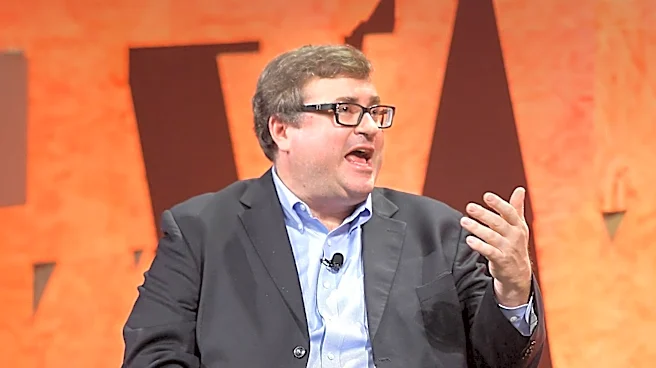
Reid Hoffman, co-founder of LinkedIn and a prominent venture capitalist, has publicly stated that the majority of Silicon Valley stands for humanist, pro-society values, aiming to build technology that benefits many. He expressed concern over the tech industry's
damaged brand in America, attributing it to some wealthy tech figures' public support for administrations perceived as harmful to Americans. Hoffman believes that regaining public trust will require significant effort. He also commented on the implications of recent midterm elections for the venture capital industry, suggesting that VCs should re-evaluate their assumptions about how most Americans are experiencing the economy, given voters' rejection of the status quo. Furthermore, Hoffman highlighted the importance of AI in team collaboration, advocating for its use to enhance collective sharpness rather than just individual speed. He also cautioned against connecting AI or any automated system to nuclear infrastructure, emphasizing the need to keep such systems disconnected from the internet for safety.
Why It's Important?
Hoffman's statements are significant because they come from a highly influential figure in the tech and venture capital sectors, reflecting a growing awareness within the industry about its public perception and societal impact. His call for a return to humanist values and a focus on technology that supports the many signals a potential shift in industry priorities, moving beyond purely profit-driven motives. The acknowledgment of tech's 'hit' brand in America underscores a critical challenge for the sector: rebuilding trust with the general public, which is essential for continued innovation and adoption of new technologies. His remarks on the midterm elections suggest that political outcomes can directly influence investment strategies and economic outlooks within the venture capital world, prompting a re-evaluation of market assumptions. The warning about AI and nuclear systems highlights a critical ethical and safety concern, emphasizing the need for responsible development and deployment of advanced technologies to prevent catastrophic risks.
What's Next?
In the immediate future, Hoffman's comments may encourage further dialogue within the tech community regarding ethical AI development and the industry's broader societal responsibilities. Venture capitalists might begin to scrutinize investments more closely through a lens of public trust and societal benefit, potentially influencing funding priorities for startups. The tech industry as a whole may increase efforts to communicate its positive contributions and address public concerns to repair its brand image. Discussions around AI safety, particularly concerning critical infrastructure like nuclear systems, are likely to intensify, potentially leading to calls for stricter regulations or industry-led best practices. Hoffman's emphasis on AI enhancing team collaboration could also steer product development towards tools that foster collective intelligence rather than individual automation, impacting the future of work technologies.
Beyond the Headlines
Beyond the immediate implications, Hoffman's remarks touch upon deeper shifts in the relationship between technology, society, and governance. The erosion of trust in the tech industry could lead to increased public scrutiny and demands for greater accountability, potentially paving the way for more robust regulatory frameworks. This could fundamentally alter the innovation landscape, prioritizing ethical considerations alongside technological advancement. The discussion about AI's role in the economy and its potential to prevent recessions, particularly by directing capital outside traditional tech hubs, suggests a broader economic rebalancing. This could lead to more geographically diverse technological development and job creation. Furthermore, the strong stance against connecting AI to nuclear systems highlights an evolving ethical frontier in AI development, where the potential for catastrophic misuse necessitates proactive and stringent safeguards, shaping future international norms around AI deployment in sensitive sectors.