




What's Happening?
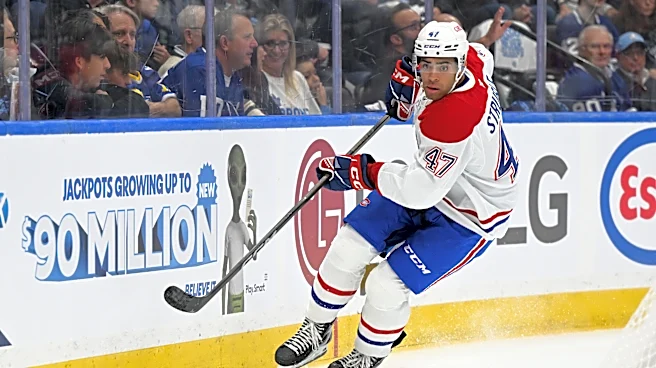
The Montreal Canadiens are making significant lineup adjustments for their game against the Detroit Red Wings. Due to an injury to Florian Xhekaj and Oliver Kapanen not being ready to return, the team is expected to dress 11 forwards and seven defensemen.
This configuration allows for flexibility, potentially seeing Arber Xhekaj move to a forward position on the fourth line, especially with Kaiden Guhle making his season debut on the blue line. This isn't the first time Arber Xhekaj has played as a forward for Montreal. Another possibility is that the seven-defenseman setup is intended to ease Guhle back into play without demanding extensive ice time in his first game. In such a scenario, the top three forward lines would likely see increased ice time, with a rotating player filling in on the fourth line. Additionally, the Canadiens have announced that goaltender Jacob Fowler will make his second consecutive start, following his debut against Nashville where he allowed three goals on 18 shots. Fowler was called up after Samuel Montembeault sustained an injury in practice. The decision to start Fowler again against Detroit, a team perceived as less offensively potent than their upcoming opponent, the Buffalo Sabres, might be aimed at providing him with more NHL experience.
Why It's Important?
These lineup changes reflect the Canadiens' strategic response to player injuries and their ongoing efforts to develop young talent. The decision to play with 11 forwards and seven defensemen, while unusual, highlights the team's adaptability and willingness to experiment with player roles, such as Arber Xhekaj potentially playing forward. This flexibility could be crucial for managing player fatigue and optimizing performance given current roster constraints. The return of Kaiden Guhle is significant, as it strengthens the defensive corps and provides a much-needed boost to the team's blue line. His integration back into the lineup will be closely watched, especially concerning how his ice time is managed. Furthermore, Jacob Fowler's consecutive starts are a clear indication of the organization's commitment to his development as a top goaltending prospect. Providing him with NHL experience, particularly against varying levels of competition, is vital for his long-term transition to the professional league. This approach could accelerate his growth and prepare him to become a permanent fixture in the Canadiens' net, impacting the team's future goaltending strategy and overall competitiveness.
What's Next?
The immediate focus will be on how the Canadiens' adjusted lineup performs against the Detroit Red Wings, particularly how the ice time is distributed among the players and the effectiveness of the 11-forward, seven-defenseman configuration. The performance of Kaiden Guhle in his season debut will be a key point of observation, as will Jacob Fowler's second start in net. His ability to adapt and improve against NHL-level competition will be critical for his confidence and future role. Following the game against Detroit, the Canadiens are scheduled to play the Buffalo Sabres, a team noted for its stronger offensive capabilities. This upcoming match will present a different challenge for Fowler and the team, potentially influencing future goaltending decisions. The team will also need to monitor the recovery of Florian Xhekaj and Oliver Kapanen, as their return would allow the Canadiens to revert to a more traditional lineup. The ongoing development of prospects like Fowler and the strategic deployment of players like Arber Xhekaj will continue to shape the team's approach in the coming games.
Beyond the Headlines
The Canadiens' current roster adjustments and strategic decisions extend beyond immediate game outcomes, reflecting broader organizational philosophies regarding player development and roster management. The willingness to experiment with player positions, such as Arber Xhekaj moving to forward, suggests a proactive approach to maximizing player utility and identifying hidden potential within the existing roster. This could set a precedent for how the team handles future injury situations or seeks to diversify player skill sets. The emphasis on giving Jacob Fowler consecutive starts, despite his initial NHL debut performance, underscores a long-term investment in his potential. This strategy highlights the importance of providing young prospects with real-game experience to accelerate their learning curve, even if it means navigating some initial struggles. Such an approach can foster a culture of development and patience within the organization, which is crucial for building a sustainable competitive team. These decisions collectively illustrate the Canadiens' commitment to both immediate tactical adjustments and long-term strategic planning for player growth and team success.