



What's Happening?
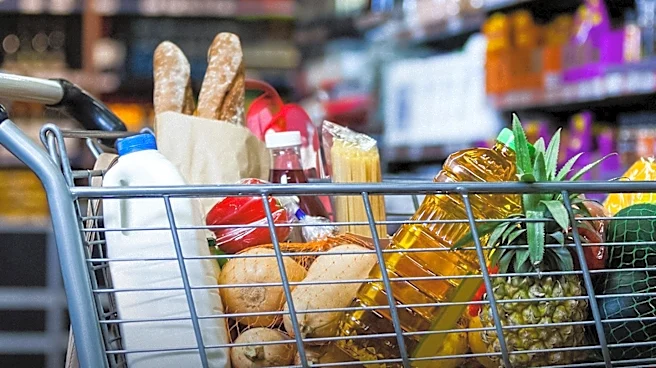
Despite a slowdown in overall inflation, grocery prices in the U.S. are expected to rise by 2.7% this year, according to the U.S. Department of Agriculture. This increase is attributed to lingering effects of post-pandemic price shocks and geopolitical
tensions, such as the conflict involving Iran. Consumers are feeling the impact of these price increases, leading to changes in shopping behavior, including a shift towards discount retailers and store brands. Long-term issues like climate change and tariffs are also contributing to sustained high prices for certain goods, such as coffee and fresh produce.
Why It's Important?
The persistent rise in grocery prices affects consumer spending and economic behavior, with potential repercussions for the broader U.S. economy. As consumers adjust their purchasing habits, traditional grocery retailers may face increased competition from discount stores. Additionally, the ongoing price pressures highlight the challenges of addressing inflation in specific sectors, particularly when driven by external factors like climate change and international trade policies. This situation underscores the complexity of managing inflation and the need for targeted policy responses.
What's Next?
Retailers may continue to adjust pricing strategies in response to consumer behavior and competitive pressures. Some large retailers have already begun investing in price cuts to attract customers, which could lead to broader market shifts. Policymakers may also need to consider additional measures to address the underlying causes of grocery inflation, such as trade policies and climate-related impacts on agriculture. The ongoing geopolitical situation and its impact on global supply chains will also be a key factor to watch.