
What's Happening?
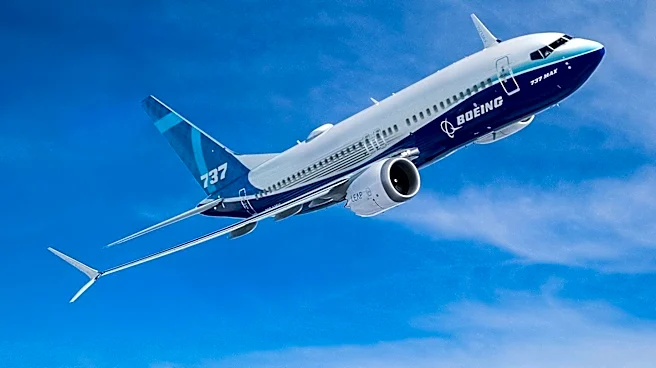
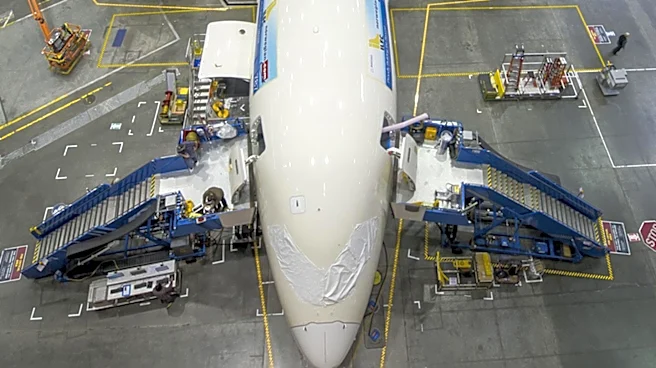
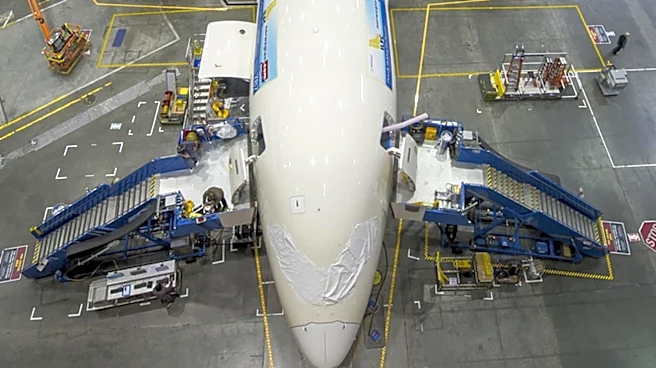
Boeing has received an order for 50 single-aisle jets from Xiamen Airlines Co., a subsidiary of China Southern Airlines. This marks China's largest purchase from Boeing in nearly a decade, valued at approximately
$7.4 billion before discounts. The order primarily consists of Boeing's 737-8 MAX aircraft. This deal follows a previous commitment from China to purchase hundreds of Boeing aircraft, signaling a potential end to uncertainty regarding Boeing's presence in the Chinese aviation market. President Trump had previously indicated expectations for China to purchase an additional 250 jets. Concurrently, Boeing announced on November 9 its plan to reduce its commercial airplane workforce by approximately 5%, through a combination of layoffs and attrition. Stephanie Pope, head of Boeing Commercial Airplanes, communicated this decision to employees, citing the need to align staffing levels with revised business plans due to production schedule adjustments and reduced aircraft output. The company had approximately 182,000 employees as of December 2025.
Why It's Important?
This dual development highlights Boeing's complex operational and market challenges. The significant jet order from China is crucial for Boeing, as it re-establishes a strong foothold in one of the world's largest aviation markets after years of strained relations and production issues. This could provide a much-needed boost to Boeing's commercial aircraft division and potentially influence future trade relations between the U.S. and China. Conversely, the workforce reduction underscores ongoing production difficulties and delivery delays, particularly with the 737 MAX and 787 Dreamliner programs. These cuts indicate that Boeing is recalibrating its production strategy to prioritize stability over rapid expansion, which could impact its supply chain and overall manufacturing efficiency. The decision reflects a strategic shift to address internal operational challenges, potentially affecting investor confidence and the broader aerospace industry's employment landscape.
What's Next?
Boeing plans to 'reset the pace of its production rate ramps' to achieve stability in its factories and with suppliers. This suggests a more cautious approach to increasing output for its 737 MAX and 787 Dreamliner models, with the company not expecting to increase monthly MAX production until mid-2027. The workforce reduction will be implemented through layoffs and attrition, with the exact number of impacted positions yet to be fully clarified. The company's performance in fulfilling the new Chinese order and managing its production adjustments will be closely watched by investors and industry analysts. Future quarterly earnings calls will likely provide more details on the impact of these workforce changes and the revised production timelines. The broader U.S.-China trade relationship may also see further developments as a result of this significant commercial deal.
Beyond the Headlines
The recent developments at Boeing reflect deeper systemic issues within the aerospace manufacturing sector, particularly concerning supply chain resilience and quality control. The company's decision to slow production and reduce its workforce, even while securing a major international order, indicates a strategic pivot towards internal stabilization rather than aggressive market expansion. This could set a precedent for other large manufacturers facing similar pressures. The long-term implications include potential shifts in global aviation market dynamics, as China continues to invest in its domestic aircraft manufacturers like Commercial Aircraft Corp. of China Ltd. (COMAC). Furthermore, the interplay between geopolitical trade relations and commercial deals, as seen with President Trump's previous leverage, highlights the complex environment in which global corporations operate, where political considerations can significantly influence business outcomes.