




What's Happening?
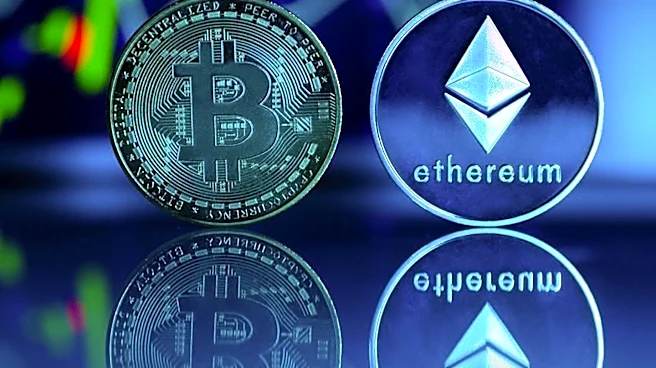
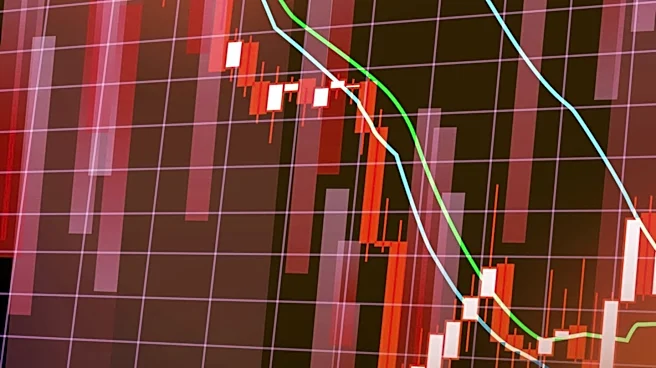
Ethereum (ETH) has seen a substantial drop in value, trading at $1,730.91 as of November 20, 2026, marking a $71.04 decrease from the previous day and a $1,101 fall over the past year. This decline follows a sharp downturn in early 2026 attributed to
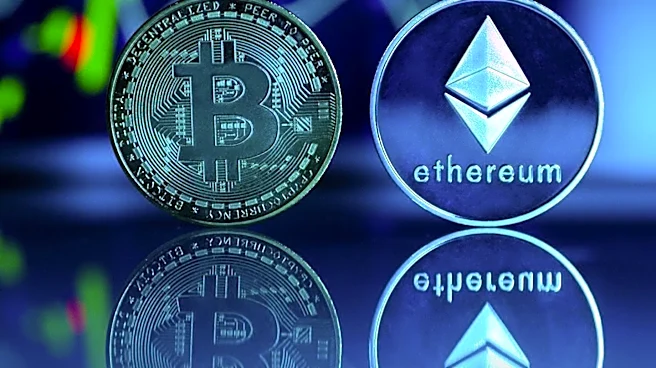
recession concerns and Ethereum co-founder Vitalik Buterin's sale of ETH. Despite its current valuation of approximately $233 billion, Ethereum remains the second-largest cryptocurrency by market capitalization, trailing Bitcoin's $1.33 trillion. Bitcoin itself has also experienced a weakening trend, falling below $62,000. The cryptocurrency market, including both Ethereum and Bitcoin, is currently facing volatility influenced by investor speculation, network usage, economic health, evolving regulations, and competition from other blockchain platforms. Ethereum, initially launched in 2014 at $0.31 per share, has seen its value increase by over 60,000% since its inception, reaching nearly $5,000 at its peak in August 2025 before subsequent fluctuations.
Why It's Important?
The recent decline in Ethereum's value and Bitcoin's fall below $62,000 highlight the inherent volatility and speculative nature of the cryptocurrency market. This instability can significantly impact investors, particularly those with substantial holdings in these digital assets. The performance of major cryptocurrencies like Ethereum and Bitcoin often serves as a barometer for the broader digital asset ecosystem, influencing investor sentiment and potentially affecting the adoption rates of blockchain technology. For U.S. investors, these price movements can lead to considerable gains or losses, impacting personal portfolios and investment strategies. Furthermore, the factors contributing to Ethereum's decline, such as recession concerns and regulatory uncertainties, underscore the broader economic and policy influences on the crypto market. The ongoing competition among blockchain platforms also suggests a dynamic landscape where Ethereum's long-term dominance is not guaranteed, prompting continuous innovation and adaptation within the sector.
What's Next?
The future trajectory of Ethereum and Bitcoin will likely be shaped by several ongoing factors. Experts remain bullish on Ethereum's long-term potential, with some predictions suggesting it could reach $10,000 to $40,000 by 2030, potentially surpassing Bitcoin. However, these projections are subject to market dynamics, regulatory developments, and technological advancements. Investors will continue to monitor economic indicators, as overall economic health influences investment in alternative assets like cryptocurrencies. Regulatory decisions, which are still evolving for the crypto space, will also play a crucial role in either reassuring or deterring investors. The competition from other blockchain platforms offering faster and cheaper transactions will necessitate Ethereum's continued evolution to maintain its market position. For investors, strategies may involve diversifying portfolios and closely watching market sentiment and technological shifts within the blockchain ecosystem.
Beyond the Headlines
Beyond the immediate price fluctuations, the ongoing performance of Ethereum and Bitcoin reflects deeper shifts in the financial landscape and technological innovation. Ethereum's role as a decentralized computing platform, rather than just a digital currency, positions it as a foundational technology for a growing ecosystem of decentralized applications (dApps) and decentralized finance (DeFi). This distinction from Bitcoin, often seen as 'digital gold,' highlights Ethereum's potential to drive broader technological adoption and reshape various industries. The shift from 'proof of work' to 'staking' for network security also signifies an evolving approach to energy efficiency and sustainability within the crypto space. The long-term implications extend to how traditional financial systems might integrate with or be disrupted by blockchain technologies, raising questions about future regulatory frameworks, data privacy, and the decentralization of power in financial transactions. The volatility also underscores the ethical considerations for investors, particularly regarding risk management and speculative trading in a relatively nascent asset class.