



What's Happening?
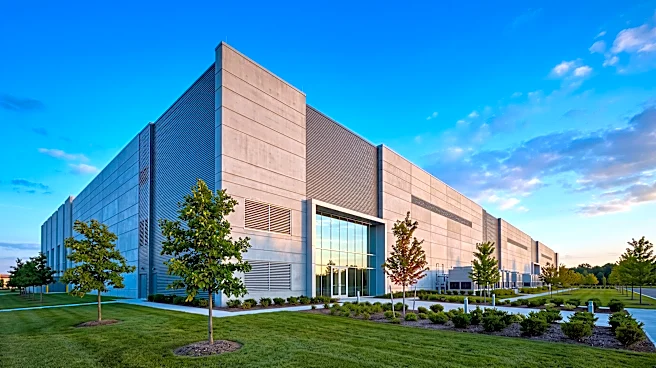
More than a dozen data centers located near O'Hare International Airport in suburban Cook County, Illinois, have received approximately $100 million in local property tax breaks. This has resulted in a significant financial burden being shifted to suburban homeowners,
according to an analysis by the Illinois Answers Project and the Chicago Tribune. Eighteen data centers in the northwest suburbs won multimillion-dollar reductions in their taxable value from Cook County officials. Eleven of these already had special tax incentives approved by local leaders, further reducing their tax burdens over a dozen years. Additionally, twelve data centers benefit from a separate state tax break on sales and use taxes. These assessment reductions and incentives collectively removed nearly $2 billion from the taxable property value of data centers in Elk Grove Village, Northlake, and Franklin Park.
Why It's Important?
This situation is important because it illustrates a contentious issue in local governance and economic development: the balance between attracting new industries and ensuring equitable tax burdens. While proponents argue that tax breaks are necessary to attract and retain data centers, which contribute to the tax base and create jobs, critics contend that these incentives disproportionately benefit large corporations at the expense of residential taxpayers. The average homeowner in Northlake, for instance, would save over $2,000 annually on their tax bill if data centers did not receive these reductions. The debate also highlights the difficulty in valuing data centers for property tax purposes, as their unique infrastructure and rapid technological evolution make traditional assessment methods challenging. This impacts local services, as millions of dollars that could fund schools, libraries, and other public services are foregone due to these tax breaks.
What's Next?
The controversy is likely to continue as Cook County Assessor Fritz Kaegi and his office actively challenge these property assessment appeals, arguing that commercial properties, including data centers, have been historically undervalued. The International Association of Assessing Officers has formed a task force to study the issue, indicating a broader need for standardized valuation methods for data centers. Local governments and taxing bodies will continue to grapple with how to balance economic development with fair taxation. Cook County leaders have signaled a willingness to reconsider tax incentives, with a working group recommending more tailored awards and reviews. Governor JB Pritzker has also temporarily paused applications for the state's data center tax credit program, suggesting a potential shift in policy towards greater scrutiny of these incentives. This could lead to legislative changes at both the county and state levels regarding how data centers are taxed and incentivized.
Beyond the Headlines
The issue of data center tax breaks delves into the ethical and economic implications of corporate subsidies. While local officials often justify these incentives by claiming they prevent properties from sitting vacant or attracting lower-value industries, critics argue that such powerful corporations, spending billions on infrastructure, should pay their fair share. The 'dark store theory,' where properties are valued as if they were vacant, is being adapted by data center owners to reduce their tax liabilities, further complicating assessments. This situation also exposes the limitations of current legal and appraisal frameworks in dealing with rapidly evolving industries like data centers. The long-term shift could involve a re-evaluation of how new industries are integrated into local economies, with a greater emphasis on transparency, accountability, and ensuring that economic growth benefits all residents, not just corporations.