



What's Happening?
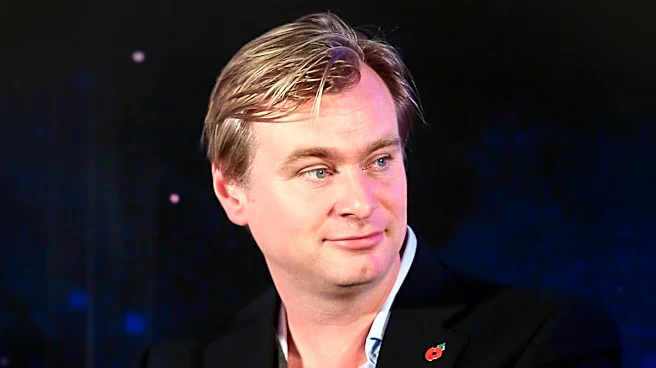
Director Christopher Nolan was initially offered the opportunity to direct the film adaptation of Ernest Cline's popular 2011 novel, 'Ready Player One.' Warner Bros. acquired the rights to the book in mid-2010, even before its publication, and began offering
the project to various filmmakers. Nolan was among the first to be approached with the script, which was co-written by Cline and Eric Eason and later revised by Zak Penn. However, Nolan declined the offer, choosing instead to direct the war film 'Dunkirk.' Following Nolan's refusal, other prominent directors such as Robert Zemeckis, Edgar Wright, Matthew Vaughn, and Peter Jackson also passed on the project. Josh Trank was reportedly offered the film twice and declined both times. Ultimately, the directorial role for 'Ready Player One' went to Steven Spielberg, who brought the pop culture-laden sci-fi adventure to the screen. The film, with a budget of $175 million, went on to gross over $600 million worldwide.
Why It's Important?
This decision highlights the diverse creative paths top-tier directors pursue and the impact their choices have on major Hollywood productions. Nolan's preference for 'Dunkirk' over 'Ready Player One' underscores his consistent interest in historical dramas and complex narratives, diverging from the more overtly pop culture-centric and virtual reality themes of Cline's novel. Spielberg's eventual direction of 'Ready Player One' proved to be a significant success, demonstrating his ability to adapt a beloved, intricate source material filled with numerous pop culture references. His involvement likely contributed to the film's commercial success and critical reception, solidifying its place as a fan favorite. The film's financial performance also showcased the viability of large-scale, effects-driven blockbusters that tap into nostalgia and virtual world concepts, influencing subsequent studio decisions regarding similar projects.
What's Next?
While 'Ready Player One' achieved significant box office success and garnered a dedicated fanbase, the prospect of a sequel remains uncertain. The source indicates that a literary sequel to Cline's book was not as well-received, leading to ongoing deliberations in Hollywood about whether a film continuation is warranted. The original film's success, driven by its intricate virtual world and extensive pop culture Easter eggs, sets a high bar for any potential follow-up. Future decisions regarding a sequel will likely depend on market analysis, the perceived demand from audiences, and the availability of a compelling narrative that can build upon the first film's foundation. The involvement of key creative personnel, including a director and screenwriters, would also be crucial for any potential development.
Beyond the Headlines
The narrative of 'Ready Player One' and its journey to the big screen reflects broader trends in Hollywood regarding intellectual property adaptation and directorial vision. The initial rejections by multiple high-profile directors, including Nolan, suggest that even highly anticipated projects can face challenges in finding the right creative match. Spielberg's eventual acceptance and successful execution of the film underscore his unique ability to blend commercial appeal with thematic depth, particularly in stories involving coming-of-age themes and fantastical elements. The film's reliance on extensive licensing for its pop culture references also highlights the complex legal and creative negotiations involved in bringing such a project to fruition, setting a precedent for how studios manage vast catalogs of intellectual property in cinematic universes.