









What's Happening?
The Climate Pledge, an initiative established to foster corporate commitment to environmental sustainability, has grown to include over 700 companies. These signatories have pledged to achieve net-zero carbon emissions by 2040, a decade ahead of the Paris
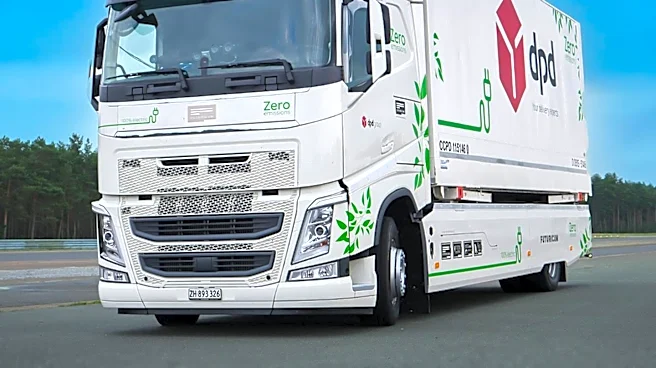
Agreement's target. The initiative emphasizes that no single company can achieve the necessary scale of carbon emission reductions alone, highlighting the importance of collective action. Companies involved are demonstrating measurable progress through various strategies, including electrifying vehicle fleets, decarbonizing supply chains, and redesigning products for sustainability. For instance, Ørsted, a former coal-intensive utility, has shifted to 99% renewable energy production, reducing its Scope 1 and 2 emissions intensity by over 98% since 2006. HP has reduced its absolute Scope 1, 2, and 3 greenhouse gas emissions by 28% since 2019, and Lime, a shared electric mobility company, has cut its company-wide carbon emissions intensity by 81.4% between 2019 and 2025. Brooks Running has achieved a 17% reduction in Scope 3 greenhouse gas emissions since 2021 by working with factory partners to transition to clean energy. To Do Green, an all-electric logistics operation in Brazil, runs a fleet of approximately 600 electric vehicles, demonstrating the viability of zero-emission logistics. Amazon, a co-founder of the pledge, has reduced its overall carbon intensity by 38% while its business grew by 156%, with 100% of its global operations matched by renewable energy sources for three consecutive years.
Why It's Important?
This collective commitment by over 700 companies under The Climate Pledge signifies a substantial shift in corporate responsibility towards environmental sustainability within the U.S. and globally. By aiming for net-zero carbon emissions by 2040, these companies are setting a precedent that could influence broader industry standards and government policies. The initiative's focus on electrifying fleets, decarbonizing supply chains, and sustainable product design directly impacts various U.S. industries, from manufacturing and logistics to technology and energy. Companies that embrace these changes stand to gain a competitive advantage through enhanced brand reputation, reduced operational costs from energy efficiency, and compliance with evolving environmental regulations. Conversely, businesses that fail to adapt may face increased regulatory scrutiny, consumer backlash, and potential financial penalties. The widespread adoption of renewable energy and electric vehicles, as demonstrated by signatories like Ørsted and To Do Green, could accelerate the transition to a green economy, creating new job opportunities and fostering innovation in sustainable technologies. The emphasis on Scope 3 emissions, which includes emissions from a company's value chain, also encourages a holistic approach to sustainability, pushing suppliers and partners to adopt greener practices.
What's Next?
The Climate Pledge will continue to monitor and report on the progress of its signatories as they work towards the 2040 net-zero carbon emissions target. The initiative is expected to expand its membership, further increasing its influence on global corporate sustainability practices. Companies will likely continue to invest in innovative technologies and strategies to reduce their carbon footprint, such as advanced renewable energy solutions, sustainable logistics, and circular economy models. There will be an ongoing focus on engaging supply chains to ensure comprehensive decarbonization across entire value chains. The success stories of companies like Ørsted, HP, and Lime will serve as benchmarks and inspiration for other businesses to accelerate their own sustainability efforts. Furthermore, the collective action of these companies could influence policy discussions and regulatory frameworks, potentially leading to more stringent environmental standards and incentives for sustainable business practices. The continued growth and impact of The Climate Pledge could also foster greater collaboration between businesses, governments, and non-profit organizations to address climate change on a larger scale.
Beyond the Headlines
The commitment of over 700 companies to The Climate Pledge extends beyond mere carbon reduction; it represents a fundamental shift in corporate ethos and a redefinition of business success. This movement highlights a growing recognition that environmental stewardship is not just a regulatory burden but a strategic imperative for long-term viability and profitability. The emphasis on Scope 3 emissions, which often constitute the largest portion of a company's carbon footprint, signifies a deeper ethical responsibility, pushing companies to influence their entire ecosystem of suppliers and partners. This could lead to a ripple effect, transforming entire industries and supply chains towards more sustainable practices. The initiative also underscores the power of collective action in addressing global challenges, demonstrating that voluntary corporate commitments can drive significant environmental progress. This could set a precedent for other global issues, encouraging similar multi-stakeholder collaborations. Furthermore, the focus on transparency and measurable progress fosters accountability, building trust with consumers and investors who are increasingly prioritizing sustainability. This shift could ultimately lead to a more resilient and equitable global economy, where environmental and social considerations are integrated into core business strategies.