




What's Happening?
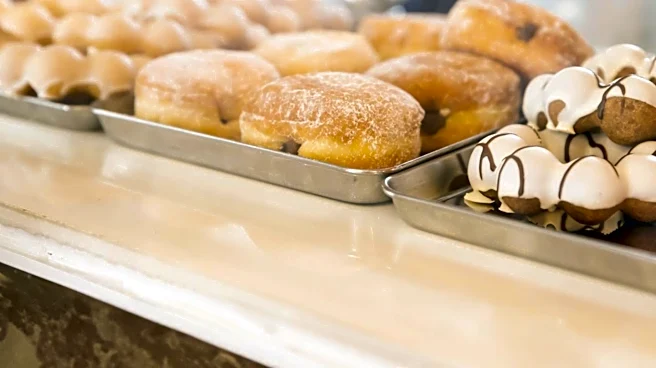
Bakery operations are increasingly evaluating the trade-offs between 'proof and bake' and 'thaw and serve' frozen dough formats to optimize labor, equipment, and product quality. 'Proof and bake' involves receiving unbaked frozen dough that requires thawing,
proofing (rising), and baking on-site, offering oven-fresh aroma and crust but demanding higher skill and equipment like proofers and commercial ovens. Conversely, 'thaw and serve' products arrive fully baked and frozen, needing only thawing and optional warming, which minimizes labor and equipment but sacrifices the fresh-baked aroma and has a shorter holding window once thawed. Intermediate options like pre-fermented frozen dough (ready to bake) and par-baked frozen products offer a balance, providing some oven freshness with reduced labor and process risk. The choice between these methods depends heavily on a bakery's existing infrastructure, staffing capabilities, and daily volume predictability.
Why It's Important?
The decision between 'proof and bake' and 'thaw and serve' significantly impacts a bakery's operational costs, labor management, and customer experience. 'Proof and bake' allows bakeries to deliver a premium, fresh-baked product with an enticing aroma, which can be a key differentiator and draw customers. However, it necessitates skilled labor for timing and process control, and a higher investment in equipment. 'Thaw and serve' offers predictability and reduces the need for skilled bakers, making it suitable for high-volume cafes or convenience stores, but shifts the cost to potential waste if forecasting is inaccurate. Understanding these models is crucial for businesses to align their production strategy with their brand promise and financial objectives, ensuring efficiency while meeting consumer expectations for quality and freshness in a competitive market.
What's Next?
Bakeries will continue to adopt hybrid models, utilizing 'proof and bake' for signature items where freshness is paramount and 'thaw and serve' or intermediate formats for other products to manage labor and operational costs. Manufacturers of frozen dough will likely innovate further to bridge the gap between these two extremes, developing products that offer enhanced quality and convenience. The industry may see increased demand for pre-proofed and par-baked items that provide the 'oven smell' without the full complexity of scratch baking. Furthermore, as labor costs rise and the availability of skilled bakers fluctuates, more operations might lean towards formats that reduce labor intensity, pushing for advancements in frozen dough technology that minimize quality compromises.
Beyond the Headlines
The strategic choice between 'proof and bake' and 'thaw and serve' reflects a broader tension in the food industry between artisanal quality and industrial efficiency. While consumers often value the authenticity and sensory experience of freshly baked goods, operational realities, such as labor shortages and cost pressures, push businesses towards more streamlined, less labor-intensive methods. This dynamic influences not only the products available but also the very definition of 'fresh' in commercial settings. The reformulation of frozen dough to withstand freezing and thawing processes, involving stronger flour and specialized ingredients, highlights the scientific advancements in food technology aimed at preserving quality under challenging conditions. This ongoing evolution shapes consumer expectations and the competitive landscape for bakeries, from small local shops to large industrial operations.