
What's Happening?
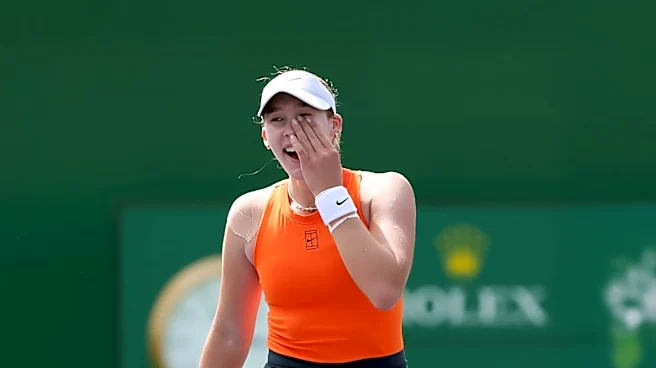
Coco Gauff's former coach, Brad Gilbert, has publicly disagreed with her recent comments criticizing the WTA Finals format. Following her defeat to Linda Noskova in Indian Wells, Gauff described the round-robin
format as 'stupid' and hinted at upcoming changes for the 2027 tournament, which is set to move to Charlotte, North Carolina. However, Gilbert, along with co-host Andrea Petkovic on 'The Big T Podcast,' praised the unique round-robin structure of the WTA Finals. They even advocated for its implementation in other tournaments, specifically suggesting that at least one of the WTA 1000 series events should adopt this format. Gilbert highlighted the 'beauty' of the group stages, noting that they offer more opportunities for players compared to the 'brutal' single-elimination format prevalent in most tennis tournaments.
Why It's Important?
This disagreement highlights a significant debate within professional tennis regarding tournament formats and player welfare. Gauff's frustration stems from the complexities of the round-robin system, where a player's advancement can depend on results beyond their own match, as she could win her next match against Marta Kostyuk but still not qualify for the semi-finals. Conversely, Gilbert and Petkovic argue that the round-robin format provides a more forgiving structure, preventing early exits and offering more competitive play, which they believe is beneficial for both players and fans. This discussion is crucial for the future direction of WTA tournaments, as decisions on format can impact player strategy, mental well-being, and the overall appeal of events to audiences and broadcasters.
What's Next?
The debate over the WTA Finals format is likely to continue, especially with Gauff hinting at potential changes for the 2027 tournament. While Gauff's comments suggest a shift away from the round-robin, Gilbert's advocacy for its wider adoption indicates a division of opinion among influential figures in tennis. The WTA will need to consider these differing perspectives as it plans future tournament structures. For Gauff, her immediate focus will be on her upcoming match against Marta Kostyuk, where she needs a win and favorable results from other matches to advance. Regardless of the outcome, this public discourse could lead to a re-evaluation of tournament formats across the WTA tour, potentially influencing decisions on how major events are structured in the coming years.
Beyond the Headlines
The discussion around tournament formats extends beyond mere logistical preferences; it touches upon the very nature of competition and fairness in professional sports. The 'brutal' single-elimination format, while straightforward, can be particularly harsh on players, especially given the long and demanding tennis season. The round-robin, while complex, offers a safety net and rewards consistent performance over a series of matches, rather than a single bad day. This debate also reflects broader trends in sports, where leagues and organizations constantly seek to balance tradition with innovation, player well-being with fan engagement, and competitive integrity with compelling narratives. The outcome of this discussion could set a precedent for how other individual sports consider their competitive structures.