






What's Happening?
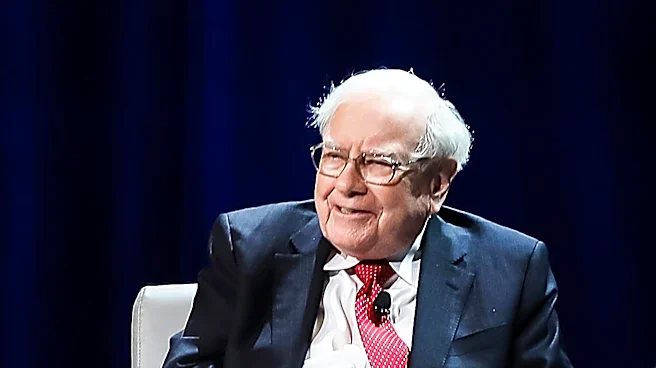
Warren Buffett, Chairman of Berkshire Hathaway, has publicly defended the Giving Pledge, an initiative he co-founded, against recent criticisms from technology billionaires who label it as 'woke.' During a March 31 interview on CNBC's 'Squawk Box,' Buffett stated
that individuals who find the pledge unappealing are free to leave, as it is not a legally binding commitment. He acknowledged that there could be various reasons for wealthy individuals to dislike each other or the initiative, but he maintained that the pledge serves its purpose by encouraging increased and earlier philanthropic giving. Buffett specifically addressed concerns raised by figures like Peter Thiel and Marc Andreessen, who have reportedly expressed dissatisfaction with the pledge. Thiel, though not a signatory himself, has reportedly encouraged other billionaires to reconsider their commitments, describing the initiative as an 'Epstein-adjacent, fake Boomer club.' Despite these criticisms, Buffett remains convinced that the Giving Pledge positively impacts philanthropy.
Why It's Important?
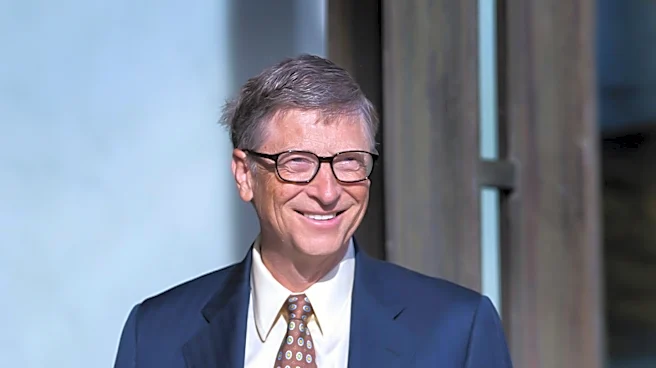
This development highlights a growing ideological divide within the philanthropic community, particularly among the ultra-wealthy. The Giving Pledge, established by Warren Buffett and Bill Gates, aims to encourage billionaires to commit the majority of their wealth to charitable causes. Criticism labeling it as 'woke' reflects a broader cultural and political polarization that is increasingly influencing even non-profit and philanthropic endeavors. For the U.S. philanthropic landscape, this friction could impact the future of large-scale charitable giving. If more wealthy individuals withdraw or refrain from joining such initiatives due to perceived ideological alignments, it could shift the dynamics of how significant private wealth is directed towards public good. This debate also underscores the evolving expectations and scrutiny placed on billionaires regarding their social responsibilities and how they choose to deploy their vast resources, potentially influencing public perception of wealth and philanthropy.
What's Next?
The ongoing debate surrounding the Giving Pledge could lead to several outcomes. It may prompt a re-evaluation of the pledge's messaging and approach to better resonate with a diverse range of wealthy individuals, or it could solidify existing divisions, leading to the emergence of alternative philanthropic models. Stakeholders, including other prominent philanthropists, non-profit organizations, and the public, will likely continue to monitor the participation and rhetoric surrounding such initiatives. The discussion might also encourage more transparency regarding the motivations and methods behind large-scale charitable giving. Furthermore, the criticisms could spur a broader conversation about the effectiveness and impact of different philanthropic strategies, potentially influencing how future generations of wealthy individuals approach their charitable contributions. The voluntary nature of the pledge, as emphasized by Buffett, means its continued success relies heavily on sustained buy-in from the billionaire community.
Beyond the Headlines
The 'woke' label applied to the Giving Pledge by some tech billionaires points to a deeper cultural clash regarding the role of wealth and social responsibility in modern society. This isn't merely about philanthropy but also about differing philosophies on capitalism, social justice, and the influence of elite groups. The critique suggests a discomfort with perceived progressive values or public pressure associated with such pledges, indicating a desire among some wealthy individuals for more private or less ideologically aligned forms of giving. This trend could lead to a fragmentation of philanthropic efforts, with some donors opting for less public or more politically conservative avenues for their charitable contributions. It also raises questions about the long-term sustainability and influence of initiatives that rely on public commitments from the ultra-rich, especially as societal expectations and political landscapes continue to evolve. The ethical dimension of how wealth is accumulated and distributed remains a central, often unspoken, undercurrent in these discussions.