





What's Happening?
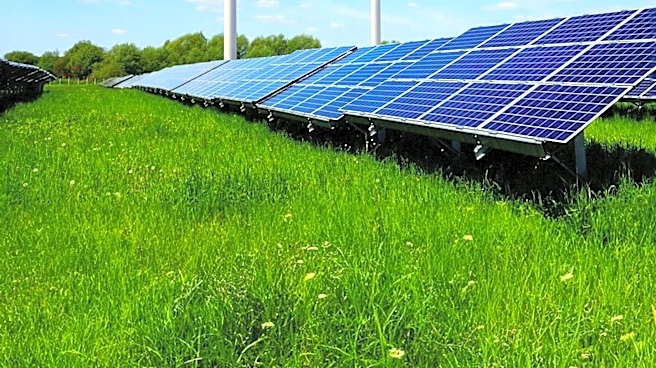
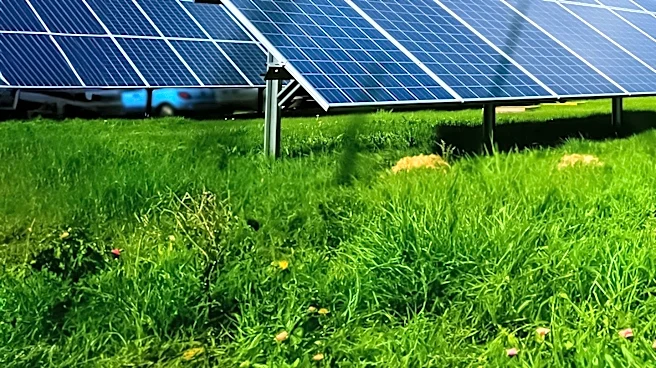
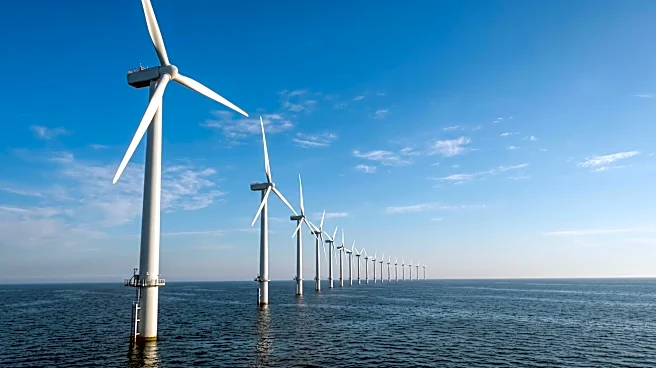
The expansion of clean energy, specifically wind and solar power, in the U.S. is being slowed by market design issues rather than technological limitations or cost, according to Ömer Karaduman, an assistant professor at Stanford Graduate School of Business.
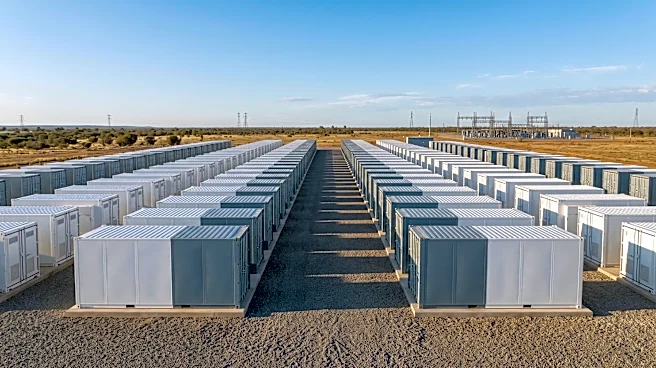
While wind and solar accounted for 17% of U.S. electricity last year, fossil fuels remain dominant, with many new natural gas plants under development. Karaduman highlights that the economics generally favor renewables, but barriers such as misaligned price incentives, regulatory hurdles, and mismatches between supply and demand are impeding their growth. A significant challenge lies in the 'battery paradox,' where grid-scale batteries, essential for stabilizing intermittent solar and wind sources, reduce price volatility, thereby diminishing their own profitability for operators. This creates a situation where the private return on batteries falls short of their societal benefit in emission reductions.
Why It's Important?
This issue is critical for the U.S. energy transition and its climate goals. The reliance on market forces to allocate capital for grid storage leads to underinvestment, despite the clear environmental benefits of such systems. The 'battery paradox' means that as grid storage effectively balances supply and demand, it inadvertently makes itself less financially attractive, creating a disincentive for further investment. This market design flaw directly impacts the scalability of renewable energy, potentially slowing down the reduction of carbon emissions and the modernization of the U.S. power grid. Furthermore, the slow approval process for new power plants and storage facilities, which can now take seven to eight years, exacerbates the problem, hindering the rapid deployment needed to meet increasing electricity demand from data centers, electric vehicles, and heat pumps.
What's Next?
To address these challenges, Karaduman suggests realigning incentives for storage operators, potentially through 'capacity payments' that compensate them for maintaining power on standby rather than per kilowatt-hour delivered. This would reduce investment risk and encourage more grid storage deployment. Additionally, reforms to the engineering review process for new power plants are crucial. Innovations like 'cluster studies,' which evaluate projects in geographic groups, and stricter screening processes, such as requiring large upfront deposits and proof of site acquisition, could speed up approvals. PJM Interconnection, a major grid operator, has already implemented some of these measures, adopting a 'first-ready, first-served' review process. The development of automated home energy management systems could also help align consumer demand with renewable generation patterns, allowing for more flexible and efficient energy use.
Beyond the Headlines
The underlying issue extends beyond mere technical or economic considerations, touching upon the fundamental design philosophy of electricity markets. The current market structure, largely designed around traditional fossil fuel generation, struggles to adequately value the unique contributions of renewable energy and storage. The 'battery paradox' reveals a deeper systemic flaw where the very success of a clean energy technology in stabilizing the grid undermines its financial viability within existing market rules. This necessitates a re-evaluation of how energy assets are compensated and how market mechanisms can be adapted to foster, rather than hinder, the transition to a clean energy economy. The challenge also highlights the need for greater coordination between technological innovation, market regulation, and consumer behavior to achieve a sustainable and reliable energy future.