
What's Happening?
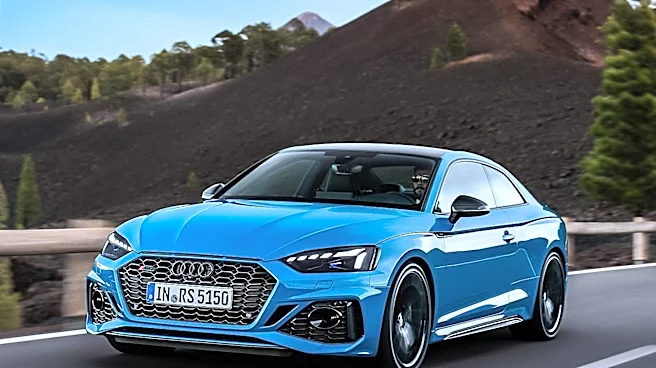
The new Audi RS 5, a plug-in hybrid performance sedan, has demonstrated impressive capabilities during a test on the Autobahn. The vehicle combines a twin-turbocharged 2.9-liter V6 engine with an electric
motor, producing a total of 630 horsepower. It accelerates from 0 to 100 km/h in 3.7 seconds and can reach a top speed of 285 km/h with optional ceramic brakes. During the test, the RS 5 achieved an indicated speed of 298 km/h. The car features a new Torque Rear mode, enhancing its handling and making it more engaging to drive. However, the vehicle's weight, due to the hybrid system, affects its practicality, reducing cargo space compared to other models.
Why It's Important?
The Audi RS 5's performance on the Autobahn highlights the advancements in hybrid technology and its application in high-performance vehicles. This model showcases Audi's commitment to combining power and efficiency, appealing to enthusiasts seeking both speed and environmental consciousness. The RS 5's capabilities position it as a strong contender in the luxury performance sedan market, potentially influencing consumer preferences and competitive dynamics. The vehicle's design and technology reflect broader trends in the automotive industry towards electrification and innovation, setting a benchmark for future models.
Beyond the Headlines
The RS 5's performance raises questions about the balance between power and practicality in hybrid vehicles. While the car excels in speed and handling, its weight and reduced cargo space may limit its appeal for some consumers. This highlights the ongoing challenge for manufacturers to optimize hybrid systems without compromising usability. Additionally, the RS 5's success could encourage further investment in hybrid technology, driving advancements in battery efficiency and vehicle design. As the automotive industry continues to evolve, the RS 5 represents a step towards more sustainable yet high-performing vehicles.