



What's Happening?
Perpetua Resources Corp. is progressing with its Stibnite Gold Project in Idaho, supported by an anticipated $2.9 billion senior secured long-term loan from the Export-Import Bank of the United States (U.S. EXIM) under the 'Make More in America Initiative.'
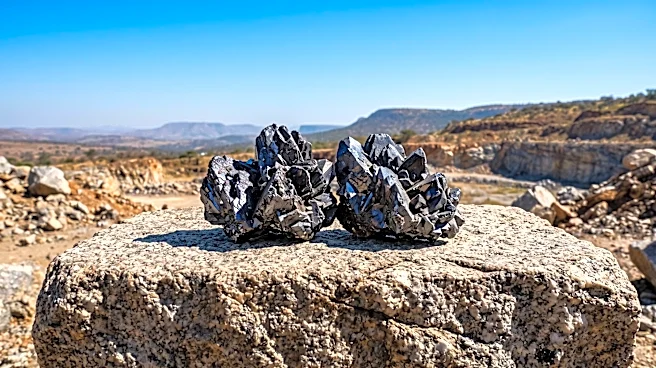
The U.S. EXIM board approved this financing on May 21, 2026, with the closing expected in the first quarter of 2027. The company recently filed its unaudited condensed consolidated financial results for the period ended September 30, 2026, highlighting significant progress in construction activities, including the completion of worker housing facility civil works and advancements on the Burntlog Route. Perpetua Resources also reported new high-grade gold and antimony discoveries from its 2026 exploration drilling program, including a new gold-tungsten zone. The Stibnite Gold Project is recognized for its high-grade, open-pit gold deposits and as the only identified domestic reserve of antimony, a critical mineral.
Why It's Important?
This development is crucial for U.S. national security and economic independence, particularly in the critical minerals sector. Antimony is essential for defense, energy, and manufacturing industries, and the Stibnite Gold Project represents the sole domestic reserve. Securing a substantial loan from U.S. EXIM underscores the U.S. government's commitment to strengthening domestic supply chains and reducing reliance on foreign sources for vital materials. The 'Make More in America Initiative' aims to bolster U.S. manufacturing and export capabilities, aligning with broader strategic goals. The project's advancement could create significant economic opportunities in rural Idaho through job creation and local investment, while also addressing environmental restoration at a historic mine site. The successful execution of this project could set a precedent for future public-private partnerships in critical mineral development.
What's Next?
Perpetua Resources expects to finalize the definitive documentation and close the $2.9 billion U.S. EXIM loan in the first quarter of 2027. The company will continue advancing critical path construction, including bridge deliveries for the Burntlog Route, installation of the worker housing facility, ongoing powerline procurement and construction, and placing orders for long-lead-time equipment. Further exploration results from the 2026 drilling program are anticipated to be announced into 2027. The company is also engaged in ongoing discussions with the Nez Perce Tribe regarding future permitting and project activities, and a South Fork Salmon Water Quality Enhancement Fund related to a Clean Water Act lawsuit. The successful completion of these steps will be vital for the project to move towards a final investment and construction decision.
Beyond the Headlines
The Stibnite Gold Project highlights the complex interplay between economic development, environmental stewardship, and national security. While the project promises to secure a domestic supply of critical minerals and create jobs, it also involves restoring a historic mine site and addressing environmental concerns, including water quality and fish habitat. The ongoing discussions with the Nez Perce Tribe underscore the importance of indigenous engagement and environmental justice in large-scale resource projects. The project's success could influence future U.S. policy on critical mineral extraction and domestic manufacturing, potentially leading to more initiatives aimed at reducing foreign dependency. The ethical considerations of balancing resource extraction with ecological preservation and community interests will remain a central theme as the project progresses.