






What's Happening?
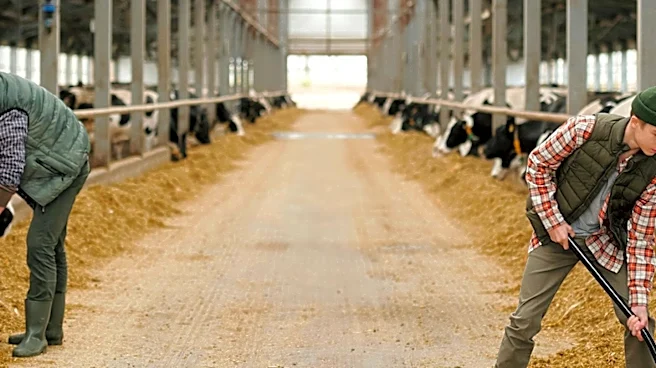
The cattle industry is adapting implant strategies due to longer days on feed (DOF), driven by drought conditions and a reduced supply of feeder cattle. With DOF often exceeding 240 days, implant timing and program design are crucial for optimizing cattle performance
and carcass value. Regulatory changes since July 2023 restrict reimplanting within a single production phase, necessitating strategic implant timing. Implants, which enhance growth and feed efficiency, are a key tool for cattle feeders. The industry is exploring extended-release implants and precision implant programming to align with extended feeding scenarios.
Why It's Important?
The evolution of implant strategies in the cattle industry reflects broader challenges and opportunities in livestock production. Longer feeding periods and regulatory changes impact cattle growth, carcass quality, and market dynamics. Effective implant strategies can enhance productivity and profitability, benefiting cattle producers and the broader agricultural economy. The focus on optimizing implant timing and program design highlights the industry's adaptability and innovation in response to environmental and regulatory pressures. These developments have implications for meat supply chains, consumer prices, and the competitiveness of U.S. beef in global markets.
What's Next?
As the cattle industry continues to adapt to longer feeding periods, producers will refine implant strategies to maximize performance and compliance. The use of extended-release implants and precision programming will likely increase, offering flexibility and improved outcomes. The industry will monitor regulatory developments and market conditions that could influence implant practices and cattle production. Stakeholders will also explore technological advancements and research findings to enhance implant efficacy and cattle management. These efforts will shape the future of cattle production and its role in the agricultural sector.