





What's Happening?
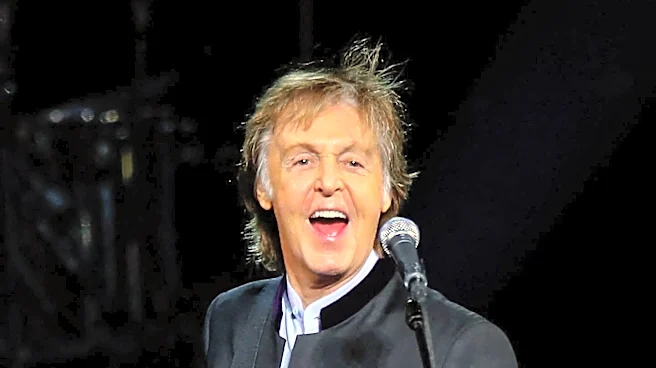
Paul McCartney's net worth has been substantially fueled by his 1976 acquisition of the publishing rights to the musical 'Grease'. While McCartney was not involved in the musical's creation, he purchased Edwin H. Morris & Company, which held the publishing rights to 'Grease',
making it a subsidiary of his own company, MPL Communications. This strategic move allowed McCartney to gain ownership of the intellectual property rights to the musical's lyrics, melody, and arrangement. Music publishing generates revenue through performance royalties, mechanical royalties from sales and streaming, and sync licensing fees when songs are used in visual media. This income stream has continued for decades, contributing significantly to McCartney's financial success, positioning him as one of the world's wealthiest musicians. Although he does not own the rights to songs specifically written for the 'Grease' film, the musical's enduring popularity on Broadway and through various revivals has ensured a consistent flow of royalties.
Why It's Important?
This development highlights the long-term financial power of intellectual property ownership in the entertainment industry, particularly in music publishing. McCartney's foresight in acquiring the publishing rights to 'Grease' demonstrates how strategic investments in established creative works can generate substantial and sustained income streams over decades. This model of revenue generation, based on royalties from performances, sales, streaming, and licensing, underscores the importance of publishing rights as a valuable asset. For artists and investors, it illustrates that ownership of a catalog can be more lucrative and enduring than income solely derived from personal creative output. The case of 'Grease' shows that even without direct creative involvement, strategic acquisition can lead to significant wealth accumulation, influencing how artists and companies approach intellectual property management and investment in the entertainment sector.
What's Next?
The income stream from 'Grease' publishing rights is expected to continue indefinitely, given the musical's enduring popularity and its continued presence in various forms of media. As long as 'Grease' is performed, streamed, sold, or licensed for visual media, MPL Communications, and by extension Paul McCartney, will continue to receive royalties. Future Broadway revivals, international productions, and ongoing distribution through streaming and rental platforms will ensure the longevity of this revenue source. This sustained income will likely further solidify McCartney's financial standing and could serve as a model for other artists and entertainment companies looking to build long-term wealth through intellectual property acquisition and management. The precise terms of MPL's publishing arrangements remain private, but the impact on McCartney's net worth is clear.
Beyond the Headlines
The story of Paul McCartney and 'Grease' delves into the complex and often overlooked financial mechanics of the music industry, particularly the distinction between songwriting and publishing rights. It underscores how early career deals can impact artists' long-term financial control over their work, as McCartney himself struggled to obtain publishing rights for his Beatles-era songs. His subsequent establishment of MPL Communications and the acquisition of other artists' catalogs, like 'Grease', represents a strategic shift towards greater financial autonomy and control over intellectual property. This case highlights the ethical and legal dimensions of intellectual property ownership, where the original creators may not always be the primary beneficiaries of a work's long-term financial success. It also illustrates a broader cultural shift where creative works become valuable assets that can be bought, sold, and managed for sustained profit, influencing the economic landscape of the entertainment world.