








What's Happening?
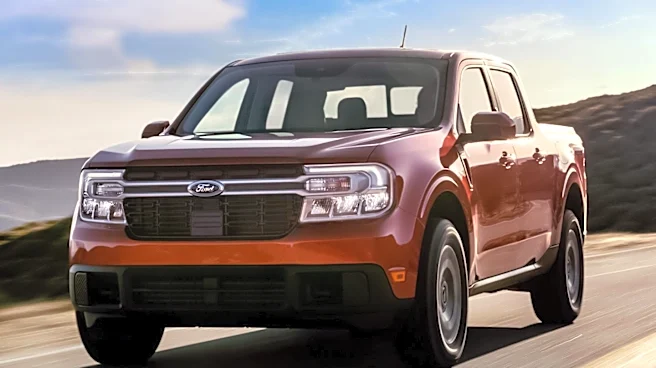
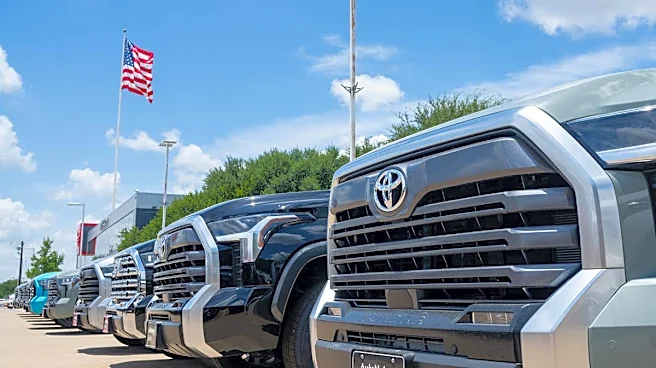
Despite the imposition of tariffs by the U.S. government, major automakers like Toyota, General Motors, and Ford remain hesitant to relocate significant portions of their production to the United States. The tariffs, intended to encourage domestic manufacturing,
have resulted in substantial financial burdens for these companies. Toyota, for instance, paid $8.4 billion in tariffs, which turned its North American operations from profit to loss. General Motors and Ford also faced hefty tariff costs, paying $3.1 billion and $1 billion respectively. While there have been some shifts, such as Toyota's decision to build half of its Tacoma pickups in San Antonio, the overall impact of tariffs has not led to a widespread relocation of production. Automakers continue to import vehicles, citing the high costs and complexities of building new U.S. facilities as deterrents.
Why It's Important?
The reluctance of automakers to move production to the U.S. despite tariffs highlights the challenges of reshoring manufacturing in a globalized economy. The financial impact of tariffs is significant, yet not enough to offset the costs and risks associated with building new factories. This situation underscores the limitations of using trade policy as a tool for economic restructuring. The continued reliance on imports affects the U.S. labor market and economic growth, as potential job creation in manufacturing remains unrealized. Additionally, the uncertainty surrounding trade policies and agreements like the USMCA adds to the hesitancy of automakers to make long-term investments in U.S. production facilities.
What's Next?
The future of U.S. manufacturing in the auto industry may depend on broader economic policies and trade agreements. Automakers are likely to continue evaluating their production strategies based on evolving trade policies and market demands. The renegotiation of the USMCA could play a crucial role in shaping the industry's decisions. Furthermore, changes in government support for electric vehicles and other emerging technologies could influence investment in domestic production. Stakeholders, including policymakers and industry leaders, will need to address these challenges to create a more conducive environment for reshoring manufacturing.