


What's Happening?
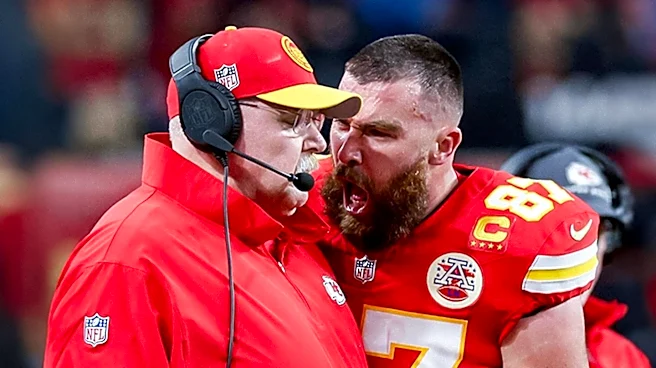
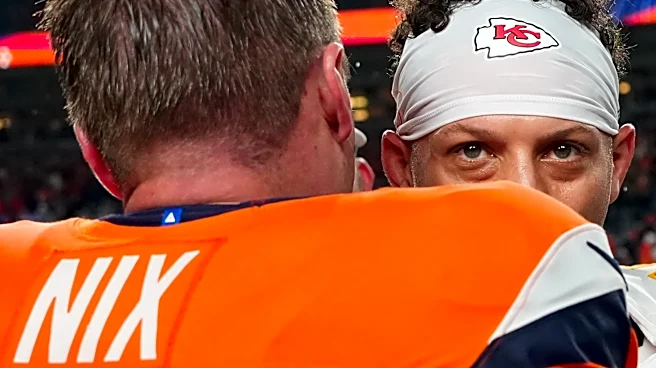
Kansas City Chiefs tight end Travis Kelce has publicly stated his agreement with officials regarding a controversial false start penalty that impacted a recent game against the Denver Broncos. This stance differs from that of his teammate, quarterback
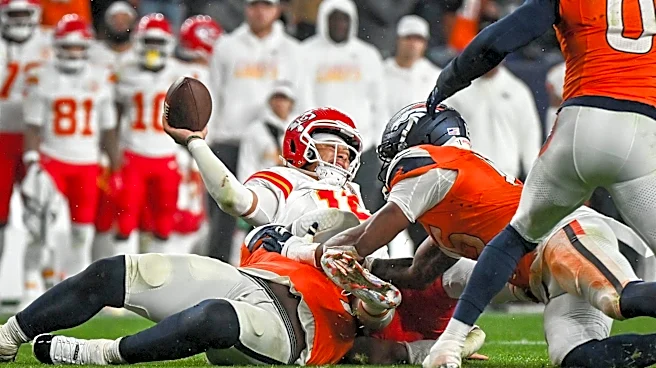
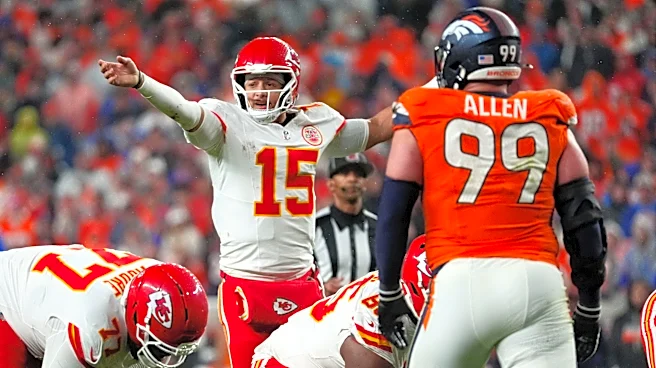
Patrick Mahomes, and head coach Andy Reid, who both expressed strong pushback against the call. The penalty occurred in the closing seconds of the game, preventing a potential go-ahead touchdown drive. During an episode of his 'New Heights' podcast with his brother Jason Kelce, Travis Kelce admitted that the player in question did flinch, justifying the penalty. Despite the call, Kelce emphasized the team's need for better execution, noting that they still had an opportunity to score after the penalty but ultimately fell short when Mahomes was sacked.
Why It's Important?
This divergence in opinion among key players on a high-profile NFL team highlights the intense scrutiny and pressure surrounding officiating decisions in professional sports. While Mahomes and Reid voiced frustration, Kelce's public agreement with the officials could be seen as an attempt to de-escalate tension and focus on team accountability. This internal dynamic within the Chiefs organization, particularly concerning a game-altering call, can influence team morale and public perception. For fans and analysts, it provides insight into how players process and react to critical moments, potentially shaping narratives around sportsmanship and leadership. The incident also underscores the ongoing debate about the consistency and impact of penalty calls in crucial game situations.
What's Next?
The Chiefs will continue their season, with the focus shifting to upcoming games and the need for improved execution, as highlighted by Travis Kelce. The discussion around officiating and player reactions to controversial calls is likely to persist throughout the NFL season, especially in high-stakes matchups. The 'New Heights' podcast will likely continue to be a platform for the Kelce brothers to discuss NFL games and trends, offering their unique perspectives on league events. The team's performance in subsequent games will ultimately determine how much this particular incident continues to be a talking point, with the emphasis on overcoming such challenges through better play.
Beyond the Headlines
The incident touches upon broader themes within professional sports, including the role of player leadership in managing adversity and public perception. Travis Kelce's willingness to publicly support an official's call, even when it goes against his team and differs from his quarterback's view, could be interpreted as a mature and objective approach. This contrasts with the common narrative of players and coaches universally criticizing calls that go against them. It also subtly reinforces the idea that while external factors like officiating are part of the game, ultimate success often hinges on a team's ability to execute under pressure, regardless of circumstances. This perspective can foster a culture of internal accountability rather than external blame.