







What's Happening?
Phillips 66 (PSX) shares experienced a significant decline of 5.55% on Tuesday, closing at $256.85, a drop of $15.09 from the previous session's close of $271.94. This downturn is primarily attributed to a sharp selloff in crude oil prices, which saw
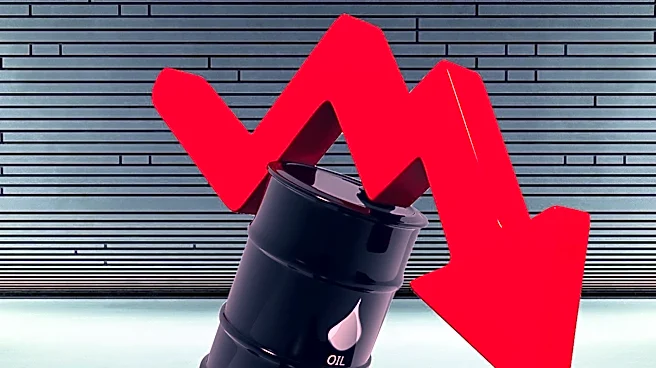
Brent crude fall over 6% to around $106 per barrel and West Texas Intermediate drop approximately 6.5% to below $98 per barrel. The crude oil decline was triggered by renewed hopes for de-escalation in the Middle East, specifically reports of resumed talks between Iranian and Qatari officials, easing fears of supply disruptions. This reduction in geopolitical risk premium negatively impacts refining margins for companies like Phillips 66, which purchase crude as feedstock. Additionally, the decline reflects broad-based profit-taking after a substantial rally in the refining sector and concerns over elevated valuations.
Why It's Important?
The sharp decline in Phillips 66's stock, mirroring a broader retreat in the energy sector, highlights the significant impact of crude oil price volatility and geopolitical developments on refining companies. For U.S. consumers, fluctuations in crude oil prices can eventually translate into changes at the pump, affecting transportation costs and overall economic stability. For the energy industry, a compression of refining margins due to falling crude prices, especially when driven by easing geopolitical tensions rather than increased demand, can reduce profitability and investment in the sector. The profit-taking observed after a historic rally suggests that investors are reassessing the sustainability of high valuations in the refining group, indicating a potential shift in market sentiment and increased caution among stakeholders. This event underscores the interconnectedness of global politics, commodity markets, and corporate financial performance.
What's Next?
Investors will closely monitor crude oil and refined-product prices, as crack spreads remain a critical factor for Phillips 66's earnings power. Any further progress in Middle East diplomacy could continue to exert downward pressure on crude prices and, consequently, refining margins. Conversely, a resurgence of supply-disruption concerns could quickly restore the sector's risk premium. Company-specific developments, such as the status of an operational issue reported at Phillips 66's Roxana, Illinois refinery, and any forthcoming guidance updates, will also be under scrutiny. While analyst sentiment has generally been constructive, elevated valuations make the stock vulnerable to further volatility if margins continue to compress. Traders will be watching for signs of stabilization in crude prices and any shifts in geopolitical dynamics.
Beyond the Headlines
The recent stock movement of Phillips 66 illustrates the complex interplay of global events and market fundamentals. The easing of Middle East tensions, while positive for global stability, paradoxically creates headwinds for refiners who benefited from higher crack spreads driven by supply concerns. This situation reveals the delicate balance between geopolitical risk and economic opportunity in the energy sector. Furthermore, the profit-taking after a significant rally points to the cyclical nature of commodity markets and the importance of valuation in investment decisions. The incident at the Roxana refinery, even if unconfirmed as a material impact, highlights the inherent operational risks in large-scale energy infrastructure, which can amplify market reactions during periods of uncertainty. This broader context emphasizes the need for energy companies to build resilience against both market volatility and operational challenges.