








What's Happening?
The third annual Chattanooga River Games in Downtown Chattanooga attracted a record number of attendees, with an estimated 35,000 people participating over the weekend. Beyond offering recreational activities such as paddleboarding and vendor shopping,
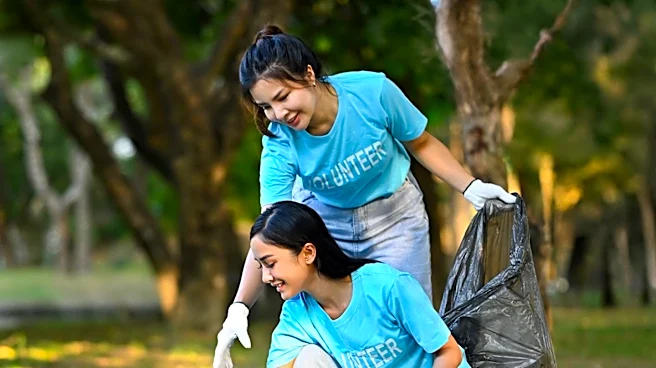
the event placed a strong emphasis on sustainability and environmental stewardship. A key component of the festival was a community trash cleanup held on Sunday morning under the Market Street Bridge, where participants were incentivized with prizes for collecting the most trash. Event CEO Travis Sims underscored the importance of caring for the outdoors as more individuals engage with it. Casey Wallin, who owns a sustainable fashion business and was a vendor at the event, lauded the cleanup as central to the River Games' core mission. Other sustainable initiatives included a tie-dye booth for old merchandise, promoting reuse, and a comprehensive sweep-through for trash across the event space after its conclusion.
Why It's Important?
The Chattanooga River Games' strong focus on sustainability establishes a significant precedent for large-scale community events, demonstrating that environmental responsibility can be seamlessly integrated with entertainment. The record attendance, coupled with active participation in cleanup efforts, highlights a growing public awareness and desire for environmental stewardship within local communities. This event serves as an exemplary model for how festivals can directly engage attendees in conservation, fostering a collective sense of responsibility for vital natural resources like the Chattanooga River. The inclusion of sustainable practices, such as reusing old merchandise, actively promotes circular economy principles and educates the public on practical methods to reduce waste. By making environmental care a core component, the River Games reinforces the intrinsic value of local ecosystems and encourages long-term behavioral changes among both residents and visitors, enhancing Chattanooga's green image.
What's Next?
The demonstrated success of the Chattanooga River Games' sustainability initiatives is likely to inspire other festivals and large public events, both regionally and nationally, to adopt similar environmental practices. Organizers of the River Games will probably continue to expand their sustainability efforts in future iterations, potentially introducing new eco-friendly programs or forging additional partnerships. The increased community engagement observed in the cleanups could lead to sustained volunteer efforts for environmental protection in Chattanooga throughout the year, extending beyond the festival itself. The event's consistent growth in attendance suggests a robust public appetite for gatherings that successfully combine recreation with a clear and actionable commitment to environmental responsibility. Local businesses and vendors may also be encouraged to integrate more sustainable practices into their operations, driven by the event's positive example and evolving consumer demand for eco-conscious choices.
Beyond the Headlines
The Chattanooga River Games exemplifies a broader movement towards urban environmentalism, where cities actively integrate ecological health into their public events and infrastructure. It underscores the critical importance of rivers and other natural public spaces as vital community assets that demand collective protection and celebration. The event's success in seamlessly combining recreation with conservation challenges the traditional notion that environmental efforts are solely the domain of specialized groups, demonstrating a wide-ranging appeal and fostering broader participation. By engaging a large and diverse audience in hands-on cleanup and sustainable practices, the River Games helps to cultivate a culture of environmental consciousness from the ground up. This initiative reflects a growing understanding that the health of local ecosystems directly impacts the overall quality of life and economic vitality of urban areas, making environmental stewardship a cornerstone of community well-being.