






What's Happening?
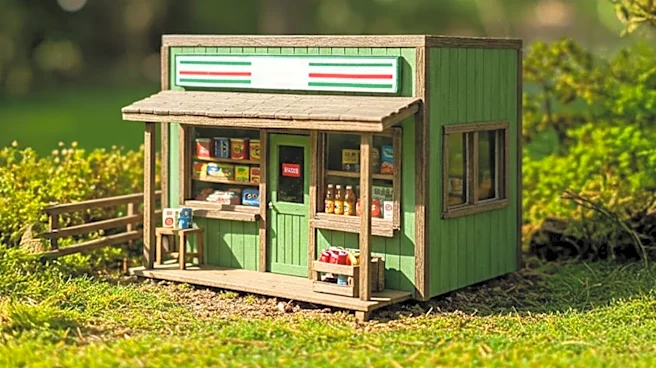
Seven & i Holdings, the parent company of 7-Eleven, has concluded its five-year partnership with Reliance Retail in India, leading to the closure of all 31 7-Eleven outlets in the country. The decision, finalized in September 2026, follows significant
financial losses, with 7-Eleven India reporting approximately ₹90 crore in losses against ₹91 crore in revenue in FY26. The venture initially began in 2019 with a master franchise agreement with Kishore Biyani’s Future Group, which aimed to establish a modern convenience store experience. However, Future Group faced financial difficulties, failing to meet expansion targets and franchise fees, leading to Reliance Retail taking over. Despite Reliance's resources, the business struggled to gain traction, primarily due to changing market dynamics, including the rise of quick commerce during the pandemic and the enduring preference for traditional neighborhood kirana stores for daily essentials.
Why It's Important?
The withdrawal of 7-Eleven from the Indian market underscores the challenges faced by international retail giants when adapting to diverse consumer behaviors and competitive landscapes in emerging economies. For U.S. businesses considering expansion into similar markets, this case highlights the critical need for localized strategies rather than direct replication of successful models from other regions like East Asia or North America. The failure to compete with existing quick commerce services and deeply entrenched local kirana stores, which account for about 91% of India’s grocery market, demonstrates that convenience alone is not a sufficient differentiator. This situation also reveals the complexities of franchise agreements and the potential pitfalls when local partners encounter financial instability, impacting the global brand's market entry and sustainability. The experience serves as a cautionary tale for other U.S. or international companies eyeing the Indian retail sector, emphasizing the importance of understanding local food habits, payment preferences, and the competitive environment.
What's Next?
While 7-Eleven has exited the Indian market, the possibility of a future return is not entirely ruled out. However, any potential re-entry would necessitate a significant re-evaluation of its business model. Future strategies might include adopting a hybrid retail model, where compact 7-Eleven outlets could function as fulfillment centers for quick-commerce orders, leveraging existing physical infrastructure for both walk-in customers and online deliveries. This approach, already being explored by other retailers like Reliance and Vishal Mega Mart, could optimize operational efficiency and address the evolving consumer demand for rapid delivery. Additionally, 7-Eleven might consider directly operating its stores rather than relying on a franchise model, potentially avoiding issues related to partner financial stability and ensuring greater control over operations and brand consistency. The market will likely observe how competitors, such as Japanese convenience store chain Lawson, approach the Indian market, as they are reportedly exploring entry through their own local subsidiaries.
Beyond the Headlines
The 7-Eleven India saga reveals deeper cultural and economic implications beyond mere business failure. The preference for home-cooked meals over convenience store offerings, a stark contrast to habits in Japan, the U.S., and China, highlights fundamental differences in lifestyle and dietary patterns that global brands must acknowledge. The strong presence of local street food vendors and kirana stores offering affordable and quick options further complicates the entry of foreign convenience chains. Moreover, the widespread adoption of digital payment systems like UPI in India diminishes the unique selling proposition of convenience stores offering bill payment and ATM services, which are significant draws in other markets. This case illustrates that successful global expansion requires more than just capital and a proven concept; it demands a profound understanding and respect for local customs, competitive dynamics, and technological advancements that shape consumer behavior. The ethical consideration for global brands is to avoid imposing a universal model and instead foster genuine integration with local market realities.