







What's Happening?
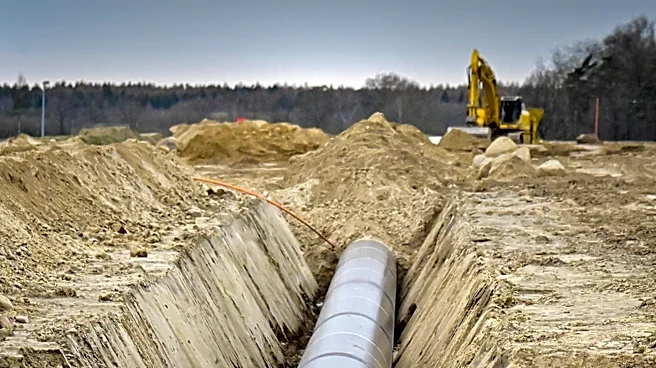
A jury has awarded Texas landowners approximately $7 million in a legal battle over easement rights and property damages related to the Matterhorn Express natural gas pipeline. The 580-mile pipeline, which transports natural gas from the Permian Basin
to the Houston area, was constructed across the landowners' nearly 4,000-acre ranch. This significant award is roughly 330 times the pipeline company's final offer of about $21,000 for crossing half a mile of their property. The case highlights the complex financial and tax implications for landowners when pipeline companies seek permanent easements. For instance, payments for permanent easements are generally considered property transactions, not wages, which can affect Social Security benefits for older recipients. Conversely, temporary construction easements are typically treated as rental income, and payments for damaged crops are considered farm income. The distinction in how these payments are categorized is crucial for tax purposes, as a single pipeline project can generate multiple types of payments with varying tax treatments.
Why It's Important?
This jury award sets a significant precedent for landowner rights and compensation in Texas, a state with extensive pipeline development. The substantial difference between the initial offer and the final award underscores the potential for undervaluation in easement negotiations and empowers landowners to pursue fair compensation. For the energy industry, particularly pipeline companies, this case may lead to increased scrutiny of their negotiation practices and potentially higher costs for securing land rights. It also brings to light the intricate tax considerations for landowners, especially those nearing or in retirement. Understanding the distinction between permanent easement payments, temporary construction payments, and crop damage compensation is vital, as misclassification can lead to unexpected tax liabilities or affect eligibility for government benefits like Medicare IRMAA premium surcharges. The outcome emphasizes the need for landowners to meticulously review and itemize all aspects of pipeline agreements before signing.
What's Next?
The outcome of this case may encourage other Texas landowners to challenge initial offers from pipeline companies, potentially leading to more protracted negotiations and increased litigation in future pipeline projects. Pipeline companies might re-evaluate their land acquisition strategies and initial compensation offers to mitigate legal risks and avoid similar large jury awards. For landowners, there will likely be a heightened awareness regarding the importance of legal counsel and expert tax advice when dealing with easement agreements. The Internal Revenue Service (IRS) guidelines on classifying these payments will remain a critical factor, and landowners will need to ensure that agreements clearly delineate payments for permanent easements, temporary construction, and damages to avoid adverse tax consequences. This case could also prompt discussions about standardized compensation frameworks or mediation processes to streamline easement negotiations.
Beyond the Headlines
The case extends beyond immediate financial compensation, touching upon broader themes of property rights, corporate power, and individual financial planning. It highlights the inherent power imbalance between large energy corporations and individual landowners, underscoring the importance of legal recourse for protecting private property interests. The tax implications, particularly for older landowners, reveal a less obvious but critical dimension: how large, one-time payments can inadvertently impact long-term financial stability, including Social Security benefits and Medicare premiums. This situation could spur greater advocacy for clearer regulations or educational resources for landowners navigating complex easement agreements. Furthermore, it reflects the ongoing tension between energy infrastructure development and private land ownership, a recurring issue in states like Texas where natural resources are abundant and infrastructure expansion is continuous. The ruling could influence future legislative efforts aimed at balancing energy needs with landowner protections.