
What's Happening?
Millie Bobby Brown, known for her role as Eleven in "Stranger Things," has been making fashion statements by drawing inspiration from iconic 1990s and early 2000s celebrity looks. In 2025, while promoting the fifth and final season of "Stranger Things"
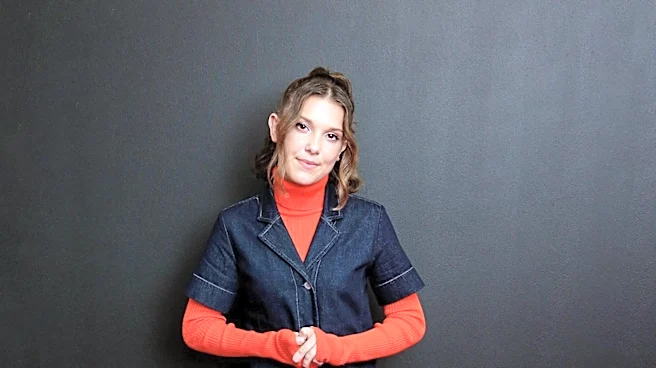
and her film "The Electric State," Brown recreated two notable outfits. For the Madrid premiere of "The Electric State," a movie set in the '90s, she wore an ultra-sheer Giorgio Armani dress, reminiscent of the one Gwyneth Paltrow wore to the 1998 "Shakespeare in Love" premiere. Paltrow herself acknowledged Brown's choice on Instagram, commenting, "You wore it best!" Additionally, in February 2025, Brown sported a two-piece denim ensemble in Spain, which fans noted evoked the Y2K aesthetic, drawing comparisons to Britney Spears's famous patchwork denim dress from the 2001 American Music Awards and Gwen Stefani's '90s style.
Why It's Important?
Millie Bobby Brown's fashion choices highlight the cyclical nature of trends and the enduring influence of past celebrity styles on contemporary pop culture. Her embrace of '90s and Y2K fashion not only generates significant media attention but also influences current fashion trends, particularly among younger demographics who follow her work and social media presence. This trend revival can impact the fashion industry, leading to increased demand for vintage-inspired clothing and accessories. Furthermore, by referencing iconic looks from figures like Gwyneth Paltrow, Britney Spears, and Gwen Stefani, Brown bridges generational gaps in fashion appreciation, introducing these historical styles to a new audience while resonating with those who remember the original trends. This also underscores the power of celebrity endorsement in shaping consumer preferences and cultural narratives around style.
What's Next?
As Millie Bobby Brown continues her promotional tours and public appearances, it is likely that her fashion choices will remain a subject of public and media interest. Her continued exploration of vintage and iconic styles could further solidify her reputation as a fashion influencer, potentially leading to collaborations with fashion brands or designers. The attention generated by her outfits may also inspire other celebrities and the general public to delve into past fashion eras, perpetuating the trend of retro revivals. This could lead to a sustained interest in '90s and Y2K fashion in retail, with designers incorporating more elements from these decades into their collections. Her influence may also extend to how films and television shows set in past decades approach costume design, potentially inspiring more direct homages to historical celebrity looks.
Beyond the Headlines
Beyond the immediate fashion buzz, Millie Bobby Brown's sartorial choices reflect a broader cultural phenomenon of nostalgia and the reinterpretation of historical aesthetics. This trend suggests a collective yearning for past eras, perhaps driven by a desire for familiarity or a romanticized view of previous decades. Her ability to successfully reintroduce these styles also speaks to the timeless appeal of certain fashion statements and the enduring impact of cultural icons. Ethically, it raises questions about originality versus homage in fashion, and how contemporary figures can pay tribute to past styles while maintaining their own identity. Legally, while direct copies of designs can be problematic, drawing inspiration from general aesthetics is common practice. Culturally, it reinforces the idea that fashion is a continuous dialogue between the past and the present, constantly evolving yet frequently looking back for inspiration.