






What's Happening?
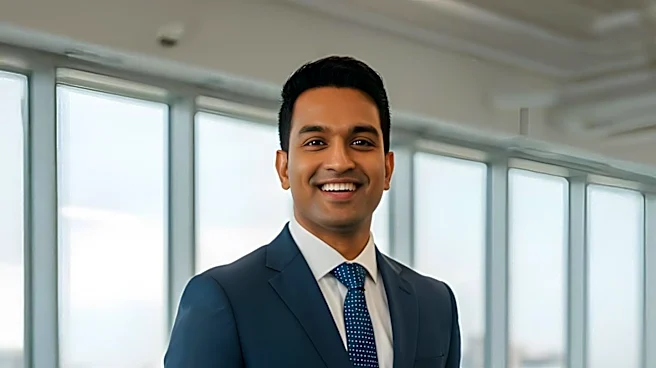
Vas Narasimhan, the chief executive of Novartis, has joined the board of directors of Anthropic, a prominent artificial intelligence company. This development coincides with Anthropic's significant expansion in Zurich, Switzerland, where it plans to increase
its engineering team to 150 individuals. The company has leased a substantial 2,500 m² space in the historic Fraumünsterpost building for its new operations. Anthropic, a direct competitor to OpenAI, intends to conduct research and train its AI models from this Swiss hub. The expansion positions Zurich as a major AI center, with numerous tech giants like Microsoft, Nvidia, Palantir, OpenAI, IBM, Meta, and Google already having a significant presence in the city. Anthropic's focus on medical research aligns with Narasimhan's background and Novartis's interests, suggesting a strategic collaboration in the AI and healthcare sectors.
Why It's Important?
The involvement of a pharmaceutical industry leader like Vas Narasimhan with a cutting-edge AI firm like Anthropic underscores the growing convergence of artificial intelligence and healthcare. This collaboration could accelerate advancements in medical research, drug discovery, and personalized medicine, areas where AI is expected to have a transformative impact. For Anthropic, having a CEO of a major pharmaceutical company on its board provides invaluable insights into the healthcare sector's needs and regulatory landscape, potentially guiding its AI development towards more impactful applications in medicine. For Novartis, this board position offers a direct link to leading AI innovation, which could inform its own digital transformation strategies and competitive positioning in a rapidly evolving industry. The expansion in Zurich further solidifies the city's role as a global AI hub, attracting top talent and fostering an ecosystem ripe for technological breakthroughs.
What's Next?
Anthropic's expansion in Zurich is expected to lead to increased research and development in artificial intelligence, particularly in areas relevant to medical research, given Narasimhan's involvement. The company will likely focus on recruiting AI engineers and researchers to staff its new facility, further intensifying the competition for AI talent in the region. This move could also spur more collaborations between AI companies and pharmaceutical giants, as the potential for AI to revolutionize healthcare becomes increasingly evident. Future developments may include the announcement of specific AI projects or partnerships aimed at addressing critical medical challenges, leveraging Anthropic's AI capabilities and Novartis's expertise in pharmaceuticals. The growth of Anthropic in Zurich may also encourage other AI firms to establish or expand their presence in the city, reinforcing its status as a leading AI innovation center.
Beyond the Headlines
The strategic alliance between a pharmaceutical titan and an AI leader like Anthropic, exemplified by Narasimhan's board role, highlights a broader trend of inter-industry convergence driven by technological advancements. This collaboration could raise important ethical and regulatory questions regarding the use of AI in healthcare, particularly concerning data privacy, algorithmic bias in medical diagnoses, and the accountability of AI systems in clinical settings. The integration of AI into medical research also has the potential to democratize access to advanced healthcare solutions globally, but it also risks exacerbating existing inequalities if not managed carefully. Furthermore, the concentration of AI development in hubs like Zurich could lead to a brain drain from other regions, creating disparities in technological advancement and economic opportunity. The long-term implications involve a fundamental reshaping of how medical research is conducted, how diseases are treated, and the very nature of healthcare delivery.