



What's Happening?
The Washington Wizards are being advised to significantly increase the offensive involvement of rookie AJ Dybantsa, especially given the team's current 4-9 record and six-game losing streak. Dybantsa, a 19-year-old drafted in 2026, is averaging 15.0 points,
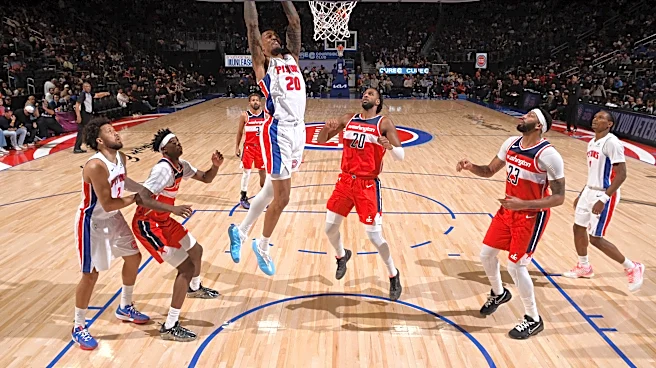
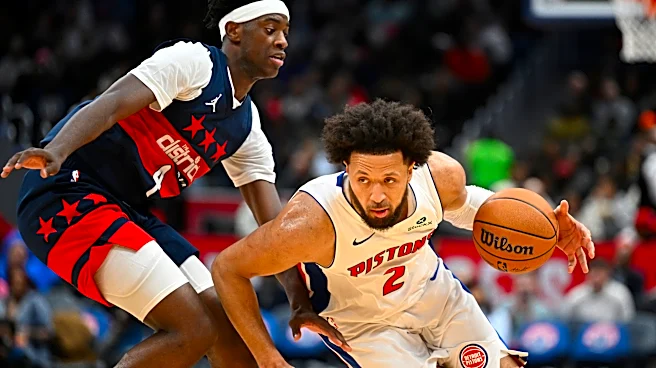
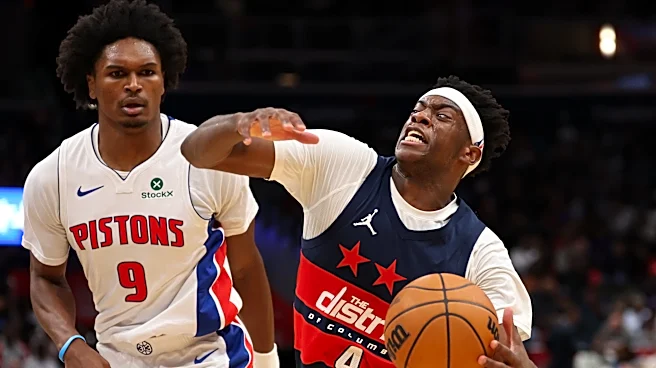
6.1 rebounds, 2.3 assists, and 1.1 steals in 33.9 minutes per game over his first nine NBA games. Despite these solid numbers for a rookie, he is currently taking the fourth-most shots on the team. Concerns have been raised about the quality of his shot attempts and the team's reluctance to allow him to run the offense. The Wizards' strategy of having Trae Young dominate the ball is seen as hindering Dybantsa's development into a potential superstar. The team's recent double-overtime loss to the Pistons, where Dybantsa only took 10 shots, highlights the issue.
Why It's Important?
This situation is important for the Washington Wizards' long-term strategy and the development of a key young player. Dybantsa is viewed as the future 'alpha' of the franchise, and his proper development is crucial for the team to achieve its goal of contending. By not maximizing his offensive opportunities, the Wizards risk stunting his growth and failing to capitalize on his potential. The current approach, where Trae Young, despite being an elite shot creator, is taking too many shots and not adequately facilitating Dybantsa's involvement, could lead to continued underperformance for the team. For the Wizards to reach their ceiling, Dybantsa needs to be a focal point of the offense, taking more shots and running the show, particularly when Young is off the court. This shift in strategy could determine the success of the team's rebuild and its ability to become a serious contender.
What's Next?
To address the issue, the Washington Wizards are expected to implement changes to get Dybantsa more involved in the offense. This could include drawing up the first play of games for him and allowing him to run the offense when Trae Young is on the bench. Head coach Brian Keefe and his staff will need to design plays that create more opportunities for Dybantsa and other young talents. The responsibility also falls on Trae Young to embrace a more traditional point guard role, focusing on facilitating and getting Dybantsa open, rather than primarily scoring. While Dybantsa may experience struggles initially with increased responsibility, the team's current losing record suggests that prioritizing his development is a necessary step, even if it means short-term challenges. The goal is to help Dybantsa grow into the superstar role the Wizards envision for him.
Beyond the Headlines
The situation with AJ Dybantsa and the Washington Wizards highlights a common challenge in professional sports: balancing the development of promising young talent with the immediate demands of team performance and the roles of established veterans. The ethical dimension involves ensuring that a high-potential rookie is given the necessary opportunities to flourish, rather than being overshadowed by existing team dynamics. From a strategic standpoint, investing in Dybantsa's growth now, even if it means a period of adjustment and potential losses, could yield significant long-term benefits for the franchise. This scenario also underscores the evolving role of veteran players like Trae Young, who are expected not only to perform but also to mentor and facilitate the development of younger teammates. The success or failure of this integration will have lasting implications for the Wizards' organizational culture and their competitive standing in the league.