







What's Happening?
French port workers are engaged in a strike, leveraging their critical position in global supply chains to demand better working conditions and concessions related to automation. Renaud Foucart, Senior Lecturer at the Department of Economics ECARES at Lancaster
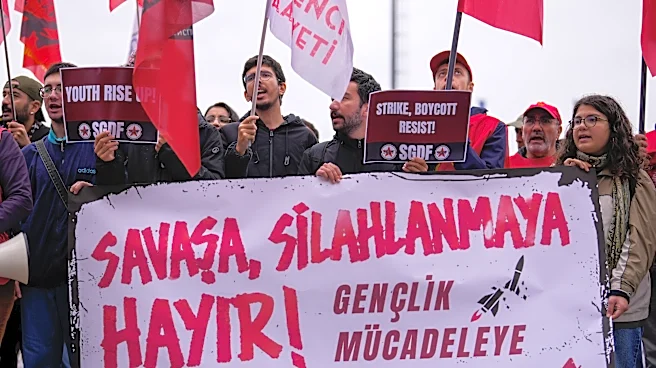
University, notes that the workers are aware of their significant influence due to their role in international trade. This industrial action is occurring against a backdrop of Europe's expanding military investment, which has raised concerns among unions about the militarization of ports. The workers are seeking to secure improvements in their employment terms and address the impact of technological advancements on their jobs.
Why It's Important?
The French port workers' strike highlights the growing tension between organized labor, technological progress, and national security priorities in Europe. Their strategic control over global supply chains gives them substantial leverage, potentially disrupting international trade and economic activities. While the immediate impact is on port operations, the broader significance lies in the workers' ability to influence policy decisions regarding automation and labor rights within critical infrastructure sectors. This could set a precedent for other labor movements facing similar challenges, potentially leading to widespread demands for better protections and benefits in industries undergoing rapid technological change and increased governmental oversight. The outcome of these negotiations could shape future labor relations and economic stability in the region.
What's Next?
The ongoing strike is expected to continue as unions push for concessions on automation and working conditions. According to Renaud Foucart, the workers are likely to achieve these concessions due to their powerful position within global supply chains. However, their ability to influence broader military policy remains questionable. The situation suggests that negotiations will focus on tangible improvements in labor terms rather than a significant shift in military investment strategies. The resolution of this strike could influence future labor disputes in other European ports and industries facing similar pressures from automation and geopolitical shifts.
Beyond the Headlines
This strike delves into the complex interplay between labor rights, economic globalization, and national security. The workers' demands for better conditions and control over automation reflect a broader societal concern about the future of work in an increasingly automated world. The mention of Europe's expanding military investment and the potential militarization of ports introduces an ethical dimension, raising questions about the balance between economic efficiency, national defense, and the rights of workers. This situation could foreshadow long-term shifts in how critical infrastructure is managed, potentially leading to increased government intervention in labor disputes within strategically important sectors.