





What's Happening?
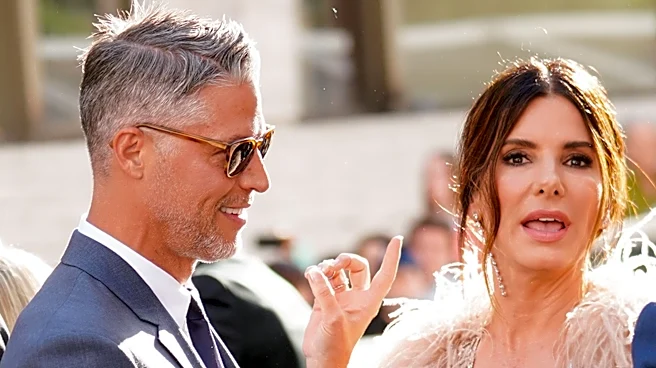
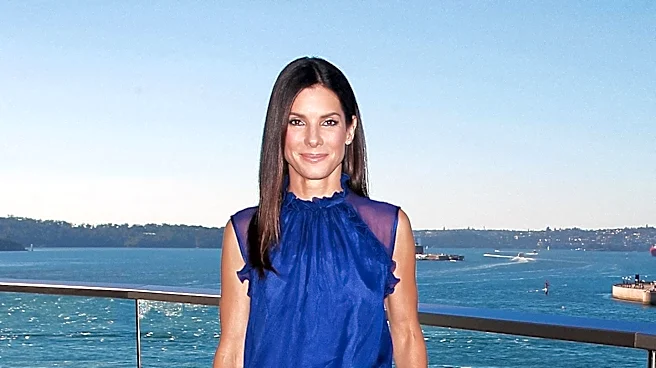
Actress Sandra Bullock has spoken extensively for the first time about the illness and final years of her partner, Bryan Randall, who passed away on August 5, 2023, at the age of 57 after a three-year battle with amyotrophic lateral sclerosis (ALS). Bullock shared
details of their family's experience during a conversation on the 'SmartLess' podcast with hosts Jason Bateman, Will Arnett, and Sean Hayes. The episode was made available to SiriusXM subscribers around August 17, with a general release scheduled for August 24. Bullock and Randall began their relationship in 2015 after she hired him to photograph her son Louis's fifth birthday. Over their nearly eight years together, they formed a family that included Bullock's adopted children, Louis and Laila, and Randall's daughter from a previous relationship. Randall's family confirmed his death in 2023, stating that he had chosen to keep his ALS diagnosis private, a wish that those caring for him honored.
Why It's Important?
Sandra Bullock's decision to share her personal experience with Bryan Randall's ALS diagnosis and subsequent passing sheds light on the profound impact of such a devastating illness on individuals and their families. Her public discussion, particularly her revelation of beginning the grieving process years before Randall's death due to the disease's progression, offers a unique perspective on anticipatory grief. This openness from a high-profile figure can help destigmatize conversations around chronic illness, end-of-life care, and the complex emotional journey of caregivers. It also brings increased awareness to ALS, a neurodegenerative disease with no cure, potentially encouraging more public discourse and support for research initiatives. For fans and the broader public, it provides insight into the private struggles faced by public figures, fostering empathy and understanding.
What's Next?
The full public release of Sandra Bullock's interview on the 'SmartLess' podcast on August 24 is expected to generate further discussion and media coverage regarding her personal journey and the challenges of ALS. This broader release will allow a wider audience to hear her account, potentially leading to increased public awareness campaigns or fundraising efforts for ALS research and patient support. It is also possible that Bullock's candidness may inspire other public figures or individuals to share their own experiences with similar health challenges, contributing to a more open dialogue about grief, illness, and caregiving. The interview's availability on SiriusXM for subscribers prior to its general release highlights the platform's role in delivering exclusive content and shaping public conversations around significant personal stories.
Beyond the Headlines
Sandra Bullock's revelation that she began grieving for Bryan Randall four years before his death due to the changes brought on by ALS highlights a less commonly discussed aspect of loss: anticipatory grief. This form of grief, experienced before an actual death, involves processing the gradual loss of a loved one's physical and mental presence as a disease progresses. Her statement, 'My person was gone long before the body,' underscores the profound psychological and emotional toll chronic degenerative illnesses take on families. This perspective challenges the conventional understanding of grief as solely a post-death phenomenon, emphasizing the ongoing, complex emotional labor involved in caring for someone with a terminal illness. It also implicitly advocates for greater recognition and support for caregivers who navigate these prolonged periods of loss and adjustment.