
What's Happening?
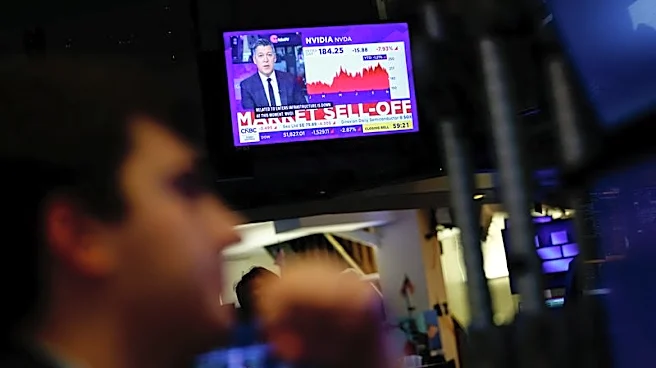
The Nasdaq Composite has officially entered correction territory, closing nearly 12% below its October 6 all-time high. This decline, surpassing the 10% threshold, signals a significant downturn for the tech-heavy
index. The sell-off was particularly sharp on Thursday, with the S&P 500 tech sector sinking 7.3% and the Philadelphia SE Semiconductor index tumbling over 12%, marking their largest one-day drops in over six years. While tech stocks saw a modest rebound on Friday, major indexes still recorded weekly losses. This market movement comes as investors grapple with cooling inflation expectations, a firm Federal Reserve stance, and new data on jobs, factory costs, and housing, all contributing to volatility in high-growth tech stocks that are sensitive to interest rates. Concerns about potential impacts from midterm election results on AI data-center buildouts also contributed to the declines.
Why It's Important?
The Nasdaq's correction is significant for the broader U.S. economy and investment landscape, as technology companies represent a substantial portion of market capitalization and innovation. A sustained downturn in tech stocks can signal broader economic anxieties, potentially impacting investor confidence and capital allocation. High-growth tech companies, often valued on future earnings potential, are particularly vulnerable to shifts in interest rate expectations and inflation, as these factors directly influence their discounted future cash flows. This environment creates both risks and potential opportunities; while some investors may face losses, others might identify undervalued assets. The performance of bellwether tech companies like Apple, Microsoft, and Amazon, which have seen mixed results recently, can influence market sentiment across various sectors, affecting retirement portfolios, institutional investments, and the overall economic outlook.
What's Next?
Investors are closely watching upcoming economic data, particularly the October consumer price index report due on Tuesday, which is a critical measure of inflation. This report will heavily influence expectations regarding the Federal Reserve's monetary policy decisions. The market anticipates the Fed will raise interest rates in December, with Fed fund futures suggesting an approximately 80% chance of a hike at the December 8-9 meeting, according to LSEG data. Additionally, earnings reports from key tech companies like CoreWeave, Applied Materials, and Cisco Systems are expected, which could further shape market sentiment and provide insights into the health of the tech sector. The interplay between inflation data, Fed actions, and corporate earnings will likely dictate the near-term trajectory of tech stocks and the broader market.
Beyond the Headlines
The current tech stock volatility highlights a deeper recalibration of market expectations regarding growth versus value, especially in an environment of rising interest rates. The rapid adoption of AI and machine learning has fueled significant growth in many tech firms, but their valuations are now being scrutinized more intensely against the backdrop of economic uncertainty. This period could lead to a re-evaluation of business models, favoring companies with strong fundamentals and clear paths to profitability over those relying heavily on speculative growth. Furthermore, the increased sensitivity of tech stocks to interest rates underscores a potential shift in investment strategies, where investors may prioritize companies with more stable cash flows and less reliance on future growth projections. This could trigger a broader rebalancing of portfolios away from purely growth-oriented tech investments towards more diversified holdings.