








What's Happening?
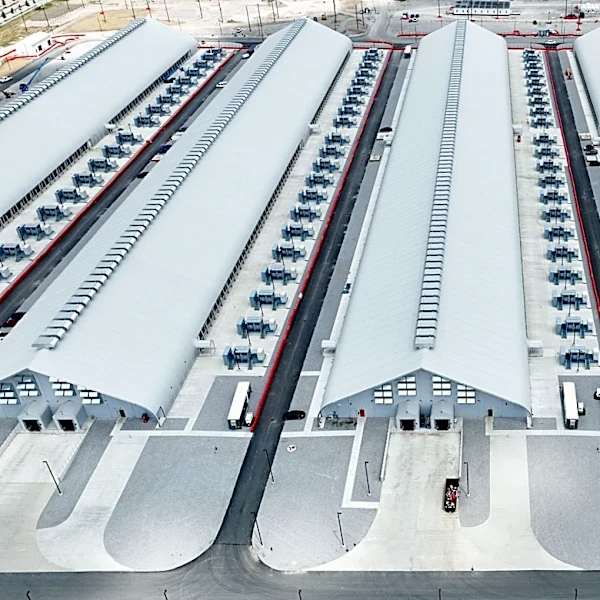
Digital Realty (NYSE: DLR), a prominent cloud- and carrier-neutral data center platform, has commenced construction on a new, state-of-the-art data center named ZUR4 in Glattbrugg, Switzerland. This facility is designed to provide 15 megawatts (MW) of IT
capacity across approximately 6,300 square meters of space. The project aims to address the increasing demand for digital infrastructure within one of Europe's key data and financial centers. ZUR4 will expand Digital Realty's existing campus in Glattbrugg, which already includes ZUR1, ZUR2, and ZUR3. The new data center is engineered to support high-density deployments and artificial intelligence (AI) workloads, incorporating advanced cooling systems and an energy-efficient architecture. Digital Realty's entire European portfolio, including its Swiss data centers, operates on 100% renewable energy, with ZUR2 having achieved the PLATINUM Plus certification from the Swiss Datacenter Efficiency Association (SDEA). The campus is also expected to offer direct cloud connectivity and serve as a gateway to Digital Realty's global PlatformDIGITAL®.
Why It's Important?
The construction of ZUR4 by Digital Realty signifies a strategic investment in bolstering digital infrastructure in a critical European hub. This expansion is crucial for supporting the growing demands of cloud providers, enterprises, network operators, and content companies that rely on secure, reliable, and high-availability IT infrastructure. The focus on high-density deployments and AI workloads highlights the evolving needs of modern technology, where data processing and storage capabilities are paramount for innovation. By expanding its capacity with a facility designed for AI, Digital Realty is positioning itself to facilitate advancements in emerging technologies. Furthermore, the commitment to 100% renewable energy and certifications like PLATINUM Plus underscores the increasing importance of sustainable practices in the data center industry, appealing to environmentally conscious businesses and regulatory bodies. This development also strengthens Switzerland's position as a significant location for data and financial services, attracting further investment and technological development.
What's Next?
Upon completion, ZUR4 will enhance Digital Realty's data center campus in Glattbrugg, providing expanded capacity for customers with specific data location, resilience, and connectivity requirements. The facility is expected to accelerate AI innovation and drive sustainable growth across Europe by offering a future-proof ecosystem that connects a vast network of customers. Digital Realty's ongoing investments in other European locations, such as FRA20 in Frankfurt and VIE13 in Vienna, indicate a broader strategy to meet the rising demand for AI-optimized, data-sovereign, and sustainable digital infrastructure across the continent. The expansion will likely attract more businesses seeking robust and environmentally responsible data solutions, further solidifying Digital Realty's market position and contributing to the digital economy of the Canton of Zurich.
Beyond the Headlines
This investment by Digital Realty extends beyond merely adding data center capacity; it reflects a broader trend of digital transformation and the increasing reliance on robust, secure, and sustainable digital infrastructure. The emphasis on AI-optimized facilities points to the anticipated exponential growth in AI and machine learning applications, which require significant computational power and data storage. The commitment to 100% renewable energy and high efficiency standards also highlights the growing pressure on technology companies to mitigate their environmental impact, setting a precedent for sustainable development in the industry. This move could influence other data center operators to adopt similar green initiatives, fostering a more environmentally responsible digital ecosystem. Moreover, the expansion reinforces the concept of data sovereignty, allowing companies to keep their data within specific geographical boundaries, which is increasingly important for regulatory compliance and data privacy concerns in Europe.