




What's Happening?
A new book titled 'The Making of Quentin Tarantino's Once Upon a Time in Hollywood' by Jay Glennie provides an in-depth exploration of the film's production. This substantial 488-page volume, containing approximately 170,000 words, delves into previously
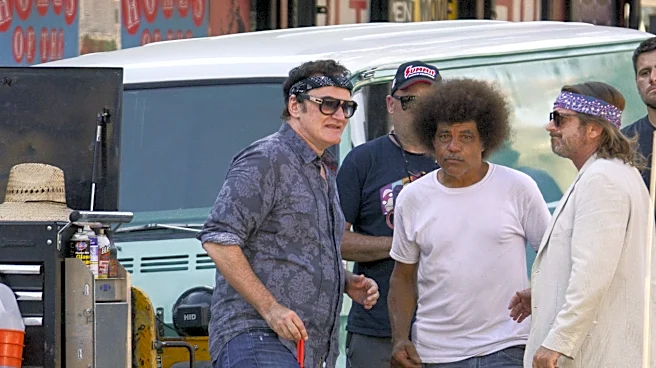
untold stories, production documents, interviews, and artwork related to Tarantino's ninth film. The book is part of a planned ten-volume series that will meticulously cover Tarantino's entire filmography. It features behind-the-scenes photographs, handwritten notes, screenplay pages, concept art, and costume sketches, offering a comprehensive look at the filmmaking process. The book highlights the extensive work involved in creating the fictional films and television programs within 'Once Upon a Time in Hollywood,' such as Rick Dalton's career, and details the recreation of 1969 Hollywood, including costume and set design nuances.
Why It's Important?
This book is significant for film enthusiasts and those interested in the intricacies of movie production, offering a rare level of detail beyond typical promotional materials. It provides insights into the creative decisions, challenges, and collaborative efforts that shaped 'Once Upon a Time in Hollywood.' The inclusion of anecdotes, such as Margot Robbie's character-specific perfume selection and stories from various crew members, underscores the human element of filmmaking. By focusing on the contributions of both prominent actors and less recognized crew members, the book emphasizes that filmmaking is a collective endeavor. This detailed account can deepen appreciation for the film itself, revealing the immense effort behind even minor on-screen elements and offering a unique perspective on Tarantino's artistic process.
What's Next?
The publication of this book is part of a larger initiative to create a ten-volume collection detailing Quentin Tarantino's entire filmography. This suggests that similar in-depth books for his other films are planned for future release, providing a comprehensive archive of his work. For fans of 'Once Upon a Time in Hollywood,' reading this book may prompt re-watching the film with a newfound understanding and appreciation for its production. The book's detailed approach could also set a new standard for how 'making-of' books are produced, encouraging more thorough and inclusive accounts of film production processes in the industry.
Beyond the Headlines
The book's emphasis on the collaborative nature of filmmaking and the often-overlooked contributions of various crew members highlights a broader cultural shift towards recognizing the collective artistry involved in cinema. It challenges the common narrative that often focuses solely on directors and lead actors, instead showcasing the hundreds of individuals whose work brings a film to life. This detailed documentation of the creative process, from concept art to costume design, also serves as a valuable educational resource for aspiring filmmakers and film scholars. It underscores the idea that even seemingly minor details in a film are the result of significant creative effort, fostering a deeper respect for the craft of moviemaking.