




What's Happening?
Finnish researchers have successfully developed a mushroom-based material, known as mycelium, that demonstrates strength comparable to cow leather and significantly superior biodegradability. This innovative material, derived from the fungus Trichoderma
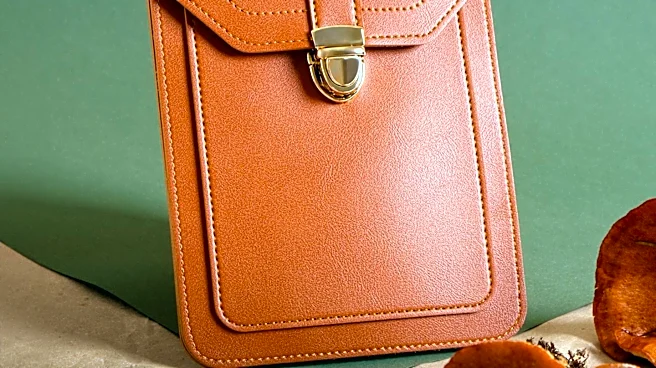
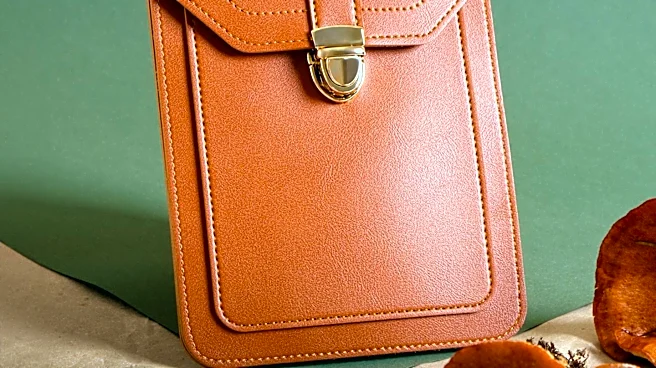
reesei, was grown in liquid tanks to form a pulp-like mass, then combined with additives and dried into sheets. In aquatic conditions, the mycelium material achieved 77% biodegradation within 28 days, a stark contrast to cow leather's 15% breakdown over 119 days and vinyl-cotton fabric's 35% over the same period. The researchers were able to cut, dye, and stitch the material into a test handbag, showcasing its potential for various products such as car interiors and household goods. This development addresses a significant bottleneck in producing strong, flexible, and scalable mycelium-based fabrics, suggesting that existing industrial processes could be adapted for its production.
Why It's Important?
This breakthrough in mushroom-based material development holds significant implications for industries seeking sustainable alternatives to traditional leather and synthetic fabrics. The superior biodegradability of mycelium offers a promising solution to reduce environmental waste associated with current materials. For the U.S. market, this could lead to a shift in manufacturing practices within the fashion, automotive, and home goods sectors, promoting more eco-friendly product lines. Companies adopting this material could gain a competitive edge by appealing to environmentally conscious consumers and potentially reducing their carbon footprint. While further research is needed for a full life cycle assessment, the potential for large-scale, affordable production of a biodegradable leather alternative could disrupt established markets and drive innovation in sustainable materials science, benefiting both the environment and forward-thinking businesses.
What's Next?
The immediate next steps involve further research to comprehensively test the material's properties and potential applications. A crucial undertaking will be a full life cycle assessment to compare its broader environmental impact, including water and energy usage, against animal leather. The researchers anticipate that manufacturers may be able to adapt existing industrial processes for production, which could accelerate its market integration. This suggests that pilot programs and collaborations with industry partners in sectors like fashion and automotive could be on the horizon to explore commercial viability. Additionally, as consumer interest in sustainable products continues to grow, there may be increased investment in scaling up production and refining the material's characteristics to meet diverse market demands.
Beyond the Headlines
Beyond its immediate application as a leather alternative, this mushroom-based material signifies a broader shift towards bio-based economies and circular design principles. The ability to cultivate materials from fungi offers a decentralized and potentially more resilient supply chain, reducing reliance on resource-intensive animal agriculture or petrochemicals. This innovation could inspire further exploration into other fungal applications for material science, potentially leading to new forms of packaging, construction materials, or even medical devices. The ethical implications are also noteworthy, as it provides a cruelty-free option for consumers and industries, aligning with growing demands for ethical sourcing. This development underscores the potential of biotechnology to address complex environmental and ethical challenges, fostering a future where materials are not only functional but also regenerative.