




What's Happening?
U.S. Commerce Secretary Howard Lutnick has quietly spearheaded a renewed effort to restart trade negotiations between Canada and the United States. These talks, which had been stalled since August, are narrowly focused on national security tariffs impacting
steel, aluminum, lumber, and autos. Lutnick's current initiative does not include the 50% tariffs imposed by the U.S. on a broad array of Canadian goods in August under Section 338 of the Tariff Act of 1930, which covers items from dairy and alcohol to furniture and electronics. Sources indicate that the previous August discussions provide a framework for a potential agreement. During those earlier talks, Canada had reportedly secured concessions such as reduced tariffs on steel shipments below a specified quota, a decrease in aluminum tariffs, and an agreement for Canadian provinces to reintroduce U.S. alcohol products to store shelves before negotiations collapsed. The primary sticking point in the August talks was autos, with the U.S. offering to cut tariffs on cars and light trucks from 25% to 15%, while Canada sought the inclusion of larger Canadian-built trucks. Although there has been some recent movement on auto-related issues, it is anticipated to remain a challenging aspect of the negotiations.
Why It's Important?
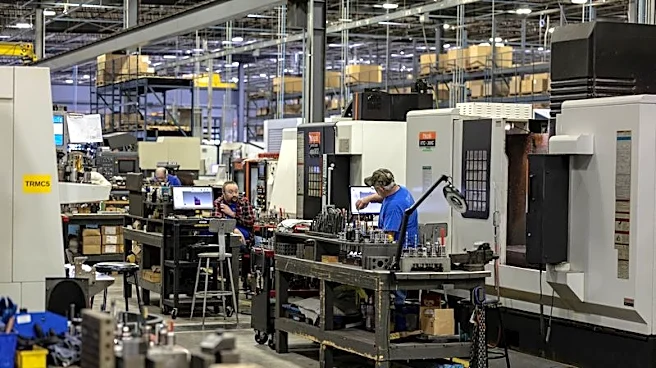
The restart of these trade talks, even with a narrow focus, is significant for U.S. industries heavily reliant on cross-border trade with Canada, particularly in the steel, aluminum, lumber, and automotive sectors. The imposition of tariffs has historically led to increased costs for U.S. manufacturers and consumers, disrupted supply chains, and created uncertainty for businesses operating in both countries. A resolution could alleviate some of these economic pressures, potentially leading to more stable pricing for raw materials and finished goods. For the U.S. auto industry, a reduction in tariffs could lower production costs and make vehicles more competitive. Conversely, if a deal is not reached, these sectors could continue to face the economic burden of existing tariffs, impacting profitability and potentially leading to job losses or reduced investment. The exclusion of broader tariffs under Section 338 from these discussions means that many U.S. agricultural and consumer goods industries will continue to face significant barriers to the Canadian market, highlighting the selective nature of the current negotiation push.
What's Next?
If formal negotiations resume, U.S. Trade Representative Jamieson Greer may rejoin the discussions. There is also a possibility that other issues, such as energy, including the Keystone XL pipeline and diesel exports, could be introduced into the talks. The immediate next steps involve continued engagement between U.S. and Canadian officials to bridge the remaining gaps, particularly concerning automotive tariffs. The success of these focused talks could set a precedent for addressing the broader range of tariffs imposed under Section 338, though there is no current indication that these will be included. Stakeholders in the affected industries will be closely monitoring the progress, as any agreement could significantly alter their operational costs and market access. The outcome will also be watched by other trading partners as an indicator of the U.S. administration's approach to resolving trade disputes.
Beyond the Headlines
The selective nature of these renewed trade talks, focusing only on specific national security tariffs while excluding broader Section 338 tariffs, suggests a strategic approach by the U.S. administration. This could indicate a desire to resolve the most contentious and economically impactful disputes first, potentially to build goodwill or to test the waters for future, more comprehensive negotiations. The emphasis on 'national security' as a justification for tariffs raises broader questions about the use of such classifications in trade policy and their potential to be applied to a wider range of goods. This approach could also be seen as a way to manage political pressure from specific U.S. industries that have been most affected by the tariffs. The ongoing negotiations highlight the complex interplay between economic interests, national security concerns, and diplomatic relations in international trade, potentially influencing future trade agreements and the global trading landscape.