




What's Happening?
Kenyan telecommunications company Safaricom and Gulfcap Investment Bank (GCIB) have launched a new Shari’ah-compliant money market fund for M-Pesa customers. Named the Ziidi Shari’ah Money Market Fund, this offering is regulated by the Capital Markets
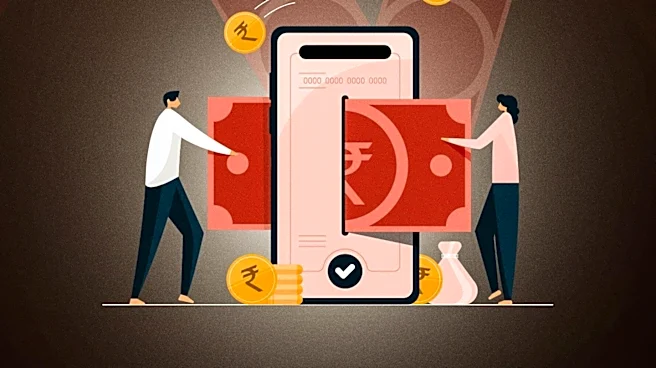
Authority (CMA) and adheres to Shari'ah principles under the supervision of GCIB's Shari'ah Supervisory Board. The fund operates independently from Safaricom's existing conventional Ziidi Money Market Fund. Customers can invest with as little as KES100 (approximately US$0.77) and make subsequent top-ups from KES 10. The service allows users to track daily profits, make free deposits, and withdraw funds to their M-Pesa wallets without charge, offering flexibility and the option to lock funds for disciplined investing. Safaricom CEO Peter Ndegwa stated that this initiative aims to make financial services relevant to diverse customer needs and promote financial inclusion.
Why It's Important?
This launch is important as it expands financial inclusion by catering to a specific demographic with Shari’ah-compliant investment options, a model that could be replicated in other markets with significant Muslim populations. For U.S. financial institutions and fintech companies, this development highlights the growing demand for culturally and religiously sensitive financial products globally. It demonstrates how mobile money platforms like M-Pesa can be leveraged to deliver specialized financial services, potentially opening new avenues for market penetration and product diversification. The success of such initiatives could influence U.S. companies to explore similar niche markets, both domestically and internationally, by partnering with local entities or adapting their offerings to meet diverse consumer needs. This could lead to new investment opportunities and a more inclusive global financial landscape.
What's Next?
The Ziidi Shari’ah Money Market Fund is expected to attract M-Pesa users seeking ethical investment opportunities, potentially increasing financial literacy and participation in capital markets among this segment. Safaricom and GCIB will likely monitor the fund's performance and customer adoption to inform future product development. Other mobile money operators and financial institutions in regions with similar demographics may consider launching comparable Shari’ah-compliant products. For U.S. fintech and investment firms, the success of this model could prompt research into the viability of Shari’ah-compliant or other culturally tailored financial products for underserved communities, potentially leading to new partnerships or product innovations aimed at expanding their global reach and market share.
Beyond the Headlines
The introduction of a Shari’ah-compliant investment fund through a mobile money platform like M-Pesa signifies a broader trend of financial innovation driven by cultural and ethical considerations. It underscores how technology can bridge gaps in traditional financial services, making investment accessible to a wider audience. This development also highlights the increasing importance of ethical finance and socially responsible investing, which are gaining traction globally, including in the U.S. The ability to integrate religious principles into modern financial products demonstrates a sophisticated understanding of consumer needs and a commitment to inclusive growth. This could inspire U.S. financial institutions to explore how they can better align their offerings with diverse ethical frameworks, fostering greater trust and engagement with various communities.