






What's Happening?
The International Monetary Fund (IMF) has renewed Chile's Flexible Credit Line (FCL) for another two years, reducing the amount to $11.8 billion. This decision acknowledges Chile's strong economic policies and institutions, despite the country's susceptibility
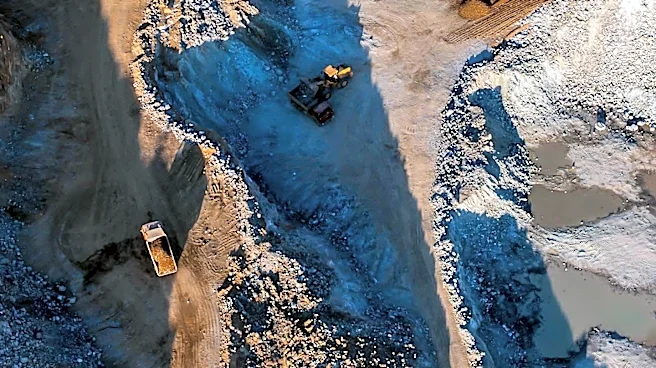
to global economic shocks. The FCL is designed as an insurance policy for nations with a proven track record of robust economic management that are nonetheless vulnerable due to their small, highly integrated economies. Bikas Joshi, the incoming country chief, highlighted that Chile, as a significant copper producer and exporter, has benefited from high copper prices, a key component in AI infrastructure. He also noted that Chile could achieve an annual growth rate of nearly 3% in the medium term if copper prices remain elevated and necessary reforms are implemented.
Why It's Important?
The renewal of Chile's Flexible Credit Line by the IMF underscores the importance of sound economic policies and institutional strength in maintaining financial stability, particularly for economies exposed to global market fluctuations. For the U.S. and global markets, Chile's economic health, supported by the FCL, contributes to overall stability in Latin America, a significant trading partner. The reliance on copper, a critical material for advanced technologies like AI, links Chile's economic performance directly to global technological advancements and supply chains. Sustained growth in Chile, bolstered by high copper prices, could ensure a stable supply of this essential commodity, benefiting U.S. industries dependent on it. Conversely, any instability in Chile, despite the FCL, could disrupt these supply chains and impact related U.S. sectors. The IMF's continued support signals confidence in Chile's ability to manage its economy, which can attract further foreign investment, including from the U.S., seeking stable emerging markets.
What's Next?
Chile is expected to continue implementing economic reforms to capitalize on high copper prices and maintain its growth trajectory. The IMF's support provides a buffer against potential global shocks, allowing Chile to pursue these reforms with greater confidence. The focus will likely be on diversifying the economy and strengthening institutions further to reduce reliance on commodity prices, even as copper remains a significant driver. International investors and financial institutions will monitor Chile's economic performance and reform efforts, potentially leading to increased foreign direct investment if the country demonstrates continued stability and growth. The reduced FCL amount suggests a degree of confidence in Chile's self-sufficiency, but also implies a continued need for vigilance against external vulnerabilities. Future discussions between Chile and the IMF will likely center on the progress of these reforms and the evolving global economic landscape.
Beyond the Headlines
The IMF's decision highlights a broader trend in international finance where countries with strong fundamentals are still provided with precautionary credit lines to mitigate risks from global volatility. This approach acknowledges that even well-managed economies can be impacted by external factors beyond their control, such as commodity price swings or geopolitical events. The case of Chile also illustrates the double-edged sword of commodity dependence; while high copper prices currently benefit the economy, they also expose it to the inherent volatility of global markets. This necessitates a long-term strategy for economic diversification and resilience. The FCL, therefore, serves not just as financial support but also as an endorsement of a country's economic governance, influencing investor perception and potentially setting a precedent for other commodity-dependent nations seeking to balance growth with stability in an interconnected global economy.