







What's Happening?
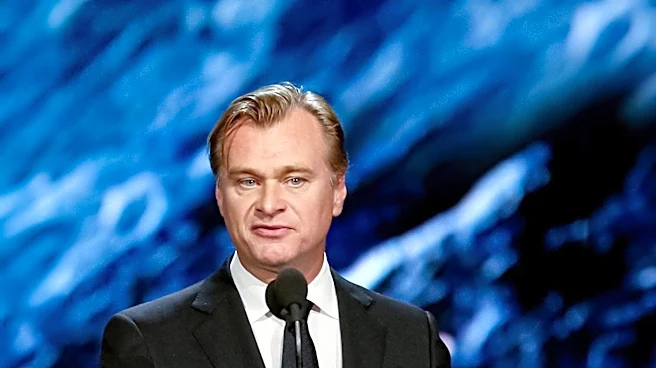
Christopher Nolan's film 'The Odyssey' is being showcased in its intended 70mm IMAX format across 25 theaters in the United States, with a significant number located in California. This format is celebrated for its superior image quality and immersive
sound, which Nolan has consistently advocated for. The limited availability of these screenings has led to a high demand, with fans traveling long distances to experience the film as intended. Despite the challenges of sourcing and maintaining old 70mm projectors, theaters are adapting to accommodate this format, highlighting the scarcity of venues and skilled projectionists capable of handling large-format film.
Why It's Important?
The resurgence of 70mm IMAX screenings underscores a renewed interest in analog film projection, a craft that has been in decline since the global shift to digital projection in the early 2010s. This revival is significant for the film industry as it highlights the enduring appeal of traditional film formats and the communal experience of cinema. The demand for 'The Odyssey' in 70mm IMAX format not only showcases the technical achievements of filmmakers like Nolan but also emphasizes the importance of preserving the skills and equipment necessary for such screenings. This trend could potentially influence future film releases and the operational strategies of theaters.
What's Next?
As interest in 70mm IMAX screenings grows, theaters may continue to invest in retrofitting their facilities to accommodate this format. This could lead to a broader revival of analog film projection, encouraging more filmmakers to shoot in large formats. Additionally, the success of 'The Odyssey' may prompt other directors to explore similar formats, potentially leading to a renaissance in film projection techniques. The industry may also see an increase in training programs for projectionists to meet the demand for skilled professionals capable of handling these complex screenings.
Beyond the Headlines
The revival of 70mm IMAX screenings raises questions about the sustainability of analog film in a predominantly digital age. It highlights the cultural and artistic value of traditional film formats, which offer a unique viewing experience that digital formats cannot replicate. This trend also reflects a broader cultural nostalgia for analog media and the tactile, immersive experiences they provide. As theaters and filmmakers navigate this landscape, they must balance the technical and financial challenges of maintaining analog equipment with the cultural and artistic benefits it offers.